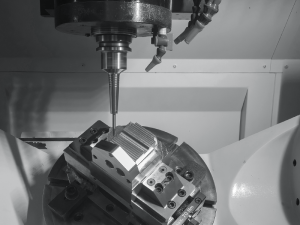
Precision is the lifeblood of watchmaking, a centuries-old craft that blends artistry with micro-engineering. Every gear, mainplate, and tiny component in a mechanical watch must adhere to unimaginably tight tolerances—often measured in microns or even sub-microns—to ensure flawless timekeeping and longevity. In the modern era, CNC machining has emerged as the cornerstone of precision watch part production, complementing traditional craftsmanship, eliminating human error, and unlocking new possibilities for complex design and scalability. From luxury Swiss timepieces to custom watch movements, CNC milling, turning, and advanced multi-axis machining technologies are redefining what’s possible in horological manufacturing.
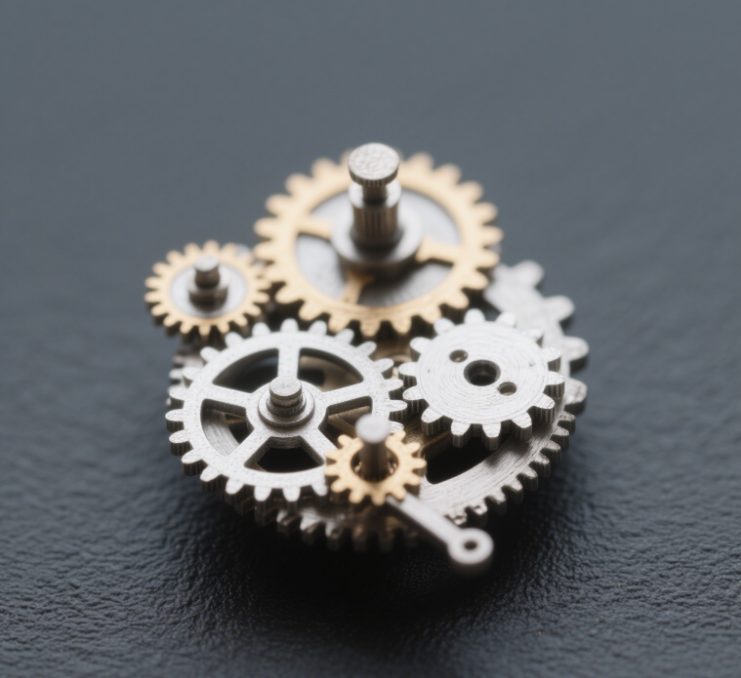
Why CNC Machining Is Indispensable for Watchmaking
Watch and clock parts are among the smallest and most intricate mechanical components in manufacturing, with even a fraction of a millimeter of error rendering a piece non-functional. Traditional handcrafting, while a testament to master watchmakers’ skill, suffers from inherent limitations: human fatigue, inconsistent precision, and slow production times. CNC machining solves these challenges by delivering unwavering, repeatable accuracy—following computer-programmed instructions exactly, every time—without compromise.
A luxury watch can contain over 700 individual parts, all of which must work in perfect unison for years. CNC machines, whether mills, lathes, or Swiss-style turning centers, produce these parts with the micron-level precision that watchmaking demands. What’s more, CNC technology does not replace human craft; it augments it. Skilled watchmakers still oversee design, assembly, and finishing, while CNC handles the high-precision, repetitive machining tasks—saving time, reducing waste, and making complex watch designs feasible for production.
CNC machining also democratizes watchmaking, opening the field to new designers and engineers who may lack the decades of training required for traditional hand manufacturing. With computer-aided design (CAD) software and accessible CNC tools, creators can design custom watch parts digitally and bring them to life with professional-grade precision—no massive workshop or legacy craftsmanship required.
Key CNC Technologies for Precision Watch Part Manufacturing
The watchmaking industry leverages a range of CNC machining technologies, each tailored to the unique demands of horological components—from delicate gears and mainplates to robust watch cases, bracelets, and clasps. Below are the most critical CNC solutions for watch and clock part production:
3-Axis and 4-Axis CNC Milling
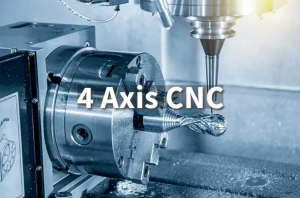
For foundational watch components like mainplates, bridges, and bracelet links, 3-axis and 4-axis CNC milling is the workhorse of production. HLW’s Elara NS CNC milling machine, a staple in watch manufacturing, excels at machining both soft metals (brass, gold) and hard, durable materials (titanium, 316L stainless steel)—the most common substrates for watch parts.
This milling technology supports both fixed-workpiece 3-axis operations and complex 4-axis automatic reversing with an optional swivel head, ideal for machining intricate features on all sides of a part. For example, watch bracelet links require 4-axis milling to drill precision screw holes, finish curved surfaces, and create spring bar and clasp release button openings—tasks that demand a specialized 4th axis fixture, often designed in CAD software like Fusion360 and machined over hundreds of hours for perfect accuracy. HLW also custom-manufactures workpiece holders and clamps to meet the unique needs of custom watch projects, ensuring a perfect fit for every component.
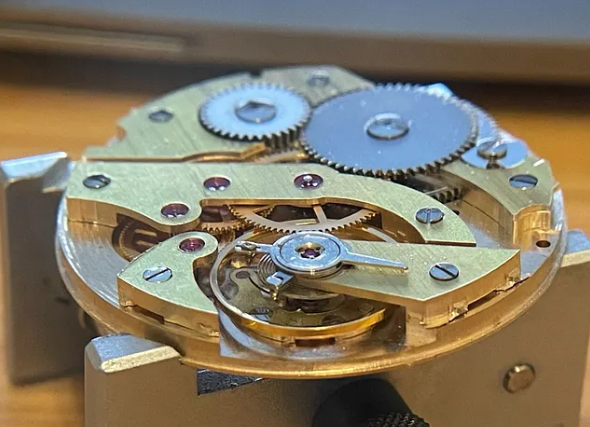
5-Axis CNC Milling
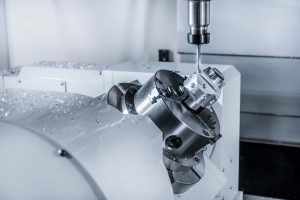
For the most complex watch parts—such as organic-curved watch cases, bezels, lugs, and skeletonized movement components—5-axis CNC milling is essential. This technology manipulates the workpiece from every angle in a single setup, eliminating error accumulation from multiple clampings and delivering impeccable surface finishes (as low as Ra0.02 μm). 5-axis milling centers use miniature tungsten carbide cutters (as small as 0.1mm in diameter) to machine gear tooth grooves with pitch errors ≤0.8 μm, meeting the sub-micron tolerances of luxury watchmaking.
Swiss-Style CNC Lathes
Swiss CNC lathes are specifically engineered for the small, slender, and complex components that form the heart of a watch movement—gears, pinions, screws, and balance shafts. HLW’s Swiss lathes deliver high-accuracy turning for medium and large production runs, with additional machining functions that enable the creation of complex parts on compact machines. A unique stationary-material, rotating-tool principle ensures fully automated, uninterrupted processing, with spindles reaching up to 12,000 rpm for a perfect balance of precision and fast throughput. Ultra-precision turning technology even replaces traditional grinding processes for components like balance shaft tenons, cutting process steps by 50% while achieving 0.1μm machining accuracy.
PC-Based CNC Control Systems
Modern CNC machining for watchmaking relies on PC-based control platforms (e.g., TwinCAT CNC) that offer scalability, flexibility, and future-proofing. These systems synchronize high-speed spindles and servo axes, with modular architecture that allows for custom configuration to reduce computing times and meet tight machine cycle demands. One Cable Technology (OCT) drive systems save space in control cabinets and eliminate signal interference, while EtherCAT I/O ensures seamless communication between components. For round-the-clock production, these control systems deliver consistent precision and easy integration with quality control and manufacturing execution systems (MES).
Achieving Sub-Micron Tolerances: The Gold Standard of Luxury Watchmaking
Luxury Swiss watchmaking demands sub-micron tolerances (0.1–1 μm)—a requirement driven by three critical factors:
- Timekeeping performance: Mechanical watches need a daily timekeeping error of ±2 seconds or less; excessive gear meshing gaps cause power loss or jamming.
- Aesthetic excellence: Polished cases, skeletonized movements, and custom finishes require surface roughness ≤0.05 μm and geometric tolerances like roundness ±0.5 μm.
- Miniaturization: Ultra-thin watches (≤3mm thick) feature parts smaller than 1mm, where uncontrolled tolerances lead to assembly failure.
CNC machining makes sub-micron precision achievable with unprecedented efficiency, addressing the limitations of traditional handcrafting (e.g., a tourbillon cage that once required hundreds of hours of hand adjustment can now be machined in a few hours with 90% better tolerance stability). HLW achieves these extreme tolerances through a holistic approach to manufacturing:
- AI-driven process optimization: Machine learning algorithms predict tool wear and adjust cutting parameters in advance, reducing scrap rates from 5% to 0.3%. Real-time dynamic compensation corrects for dimensional deviations from vibration or temperature changes (±0.2μm).
- Material and fixture control: Vacuum annealing of 316L stainless steel eliminates residual stress (deformation <0.3μm), while high-rigidity fixtures reduce clamping deformation for thin-walled parts (flatness tolerance ≤0.3μm). Ultra-mirror polishing with diamond lapping solution delivers sapphire crystal surface roughness ≤0.01μm and 99.6% light transmittance.
- Stable manufacturing environments: Constant-temperature workshops (temperature fluctuation <±0.1℃) prevent thermal expansion-related dimensional drift, and air-floating vibration isolation platforms suppress machine tool vibration to ≤10nm.
- Rigorous quality inspection: Every machined part undergoes coordinate measuring machine (CMM) and visual inspection to verify dimensional accuracy—for example, verifying hole placement between watch gears to ensure deviations as small as 0.0156mm (unacceptable in watchmaking) are eliminated.
Real-World CNC Applications in Custom Watch Production
CNC machining is the backbone of custom and prototype watch production, enabling watchmakers to bring complex designs to life with precision. HLW’s CNC technology has been used to create cutting-edge watch prototypes and production parts, including:
- Roysdon Model 1 mainplates: Machined on the Elara NS CNC mill and verified on a CMM, these mainplates achieved the critical 3.6230mm dimension between the third and escape wheel—correcting a 0.0156mm error from less precise CNC machining.
- Perpetual Calendar prototypes: A 78-component perpetual calendar module (based on a 1920s design, scaled 2x) for the Roysdon Model 3, designed in Fusion360 and machined on HLW’s Elara CNC mill and Boley F1 lathe. This prototype evaluates rotational parts (gears, cams, pinions) to ensure accurate month and leap-year tracking.
- Roysdon Model 2 bracelets: 4-axis CNC milling of bracelet links and custom fixturing for screw hole drilling, spring bar openings, and clasp components—with the custom 4th axis fixture taking 2 months to design and over 100 hours to machine for perfect precision.
- Desktop CNC watch movement prototyping: Compact desktop CNC milling machines from HLW enable small-workshop watchmakers to machine 6498 movement bridges and mainplates with tenths-of-a-millimeter tolerances. Using fixturing pallets and dowel pin sets, double-sided machining is achieved with professional-grade precision—proving that large floor-standing mills are not required for high-precision watch part production.
The Future of CNC Machining in Watchmaking
CNC technology continues to push the boundaries of what’s possible in watch and clock manufacturing, with emerging trends focused on nanoscale precision, integrated manufacturing, and digitalization:
- Nanoscale surface treatment: Ion beam sputtering creates 50–100nm thick nano-coatings on watch cases, boosting wear and corrosion resistance without compromising aesthetics.
- Micro-complex machining: Combining laser micro-welding (20μm diameter weld joints) with 5-axis CNC milling for the integrated manufacture of ultra-complex watch movements.
- Digital Twin Verification: Virtual simulation of assembly tolerance chains anticipates physical errors, reducing prototyping cycles by 60% and streamlining production.
- Smart factory integration: CNC machines connected to MES and ERP systems via umati and OPC UA enable real-time production monitoring, quality control, and process optimization—creating fully connected watch manufacturing workflows.
Partner With HLW for Precision CNC Watch Part Machining
HLW is a leading provider of CNC machining solutions for the watch and clock industry, with decades of expertise in micron and sub-micron precision manufacturing. Our range of CNC mills, Swiss lathes, and 5-axis machining centers is engineered to meet the unique demands of horological components—from tiny gears and mainplates to custom watch cases and bracelets. We offer:
- Custom fixturing, workpiece holders, and clamp design for bespoke watch projects.
- Machining of all watchmaking materials (brass, gold, titanium, 316L stainless steel, ceramic).
- Rigorous CMM and visual quality inspection for every part.
- Accessible desktop CNC solutions for small workshops and large-scale production systems for luxury watch brands.
- End-to-end support from CAD design to final machining and finishing.
Whether you’re a custom watchmaker prototyping a single movement or a luxury brand producing high-volume precision parts, HLW’s CNC machining technology delivers the uncompromising precision that watchmaking demands.
Contact HLW Today
Phone: +86 18664342076
Email: info@helanwangsf.com
Discover how our CNC machining solutions can elevate your watch and clock part production to the next level of precision and innovation.