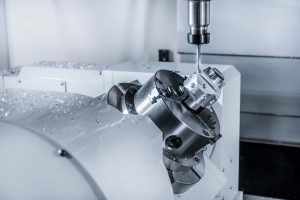
Valve parts are critical to fluid control, pressure regulation, and system performance across aerospace, defense, oil and gas, industrial manufacturing, and water treatment sectors. CNC (Computer Numerical Control) machining stands as the gold standard for producing these high-precision components, delivering tight tolerances, complex geometries, and consistent quality for custom and standard valve assemblies alike. At HLW, we leverage state-of-the-art CNC technology to manufacture all types of valve parts—from custom valve bodies to stems, discs, seats, and bonnets—meeting the most stringent industry specifications for mission-critical applications. For tailored CNC machining solutions for your valve projects, contact us at +86 18664342076 or info@helanwangsf.com.
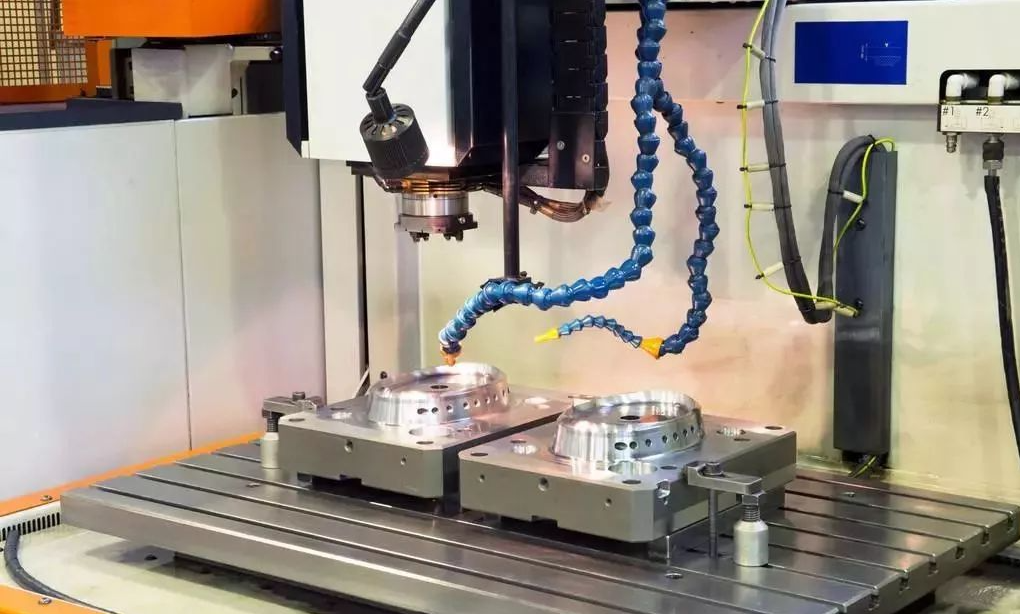
Why CNC Machining for Valve Parts?
CNC machining is the preferred manufacturing process for valve components due to its unmatched ability to address the unique design and performance demands of fluid control systems. Unlike traditional manufacturing methods, CNC machining offers four core advantages that make it indispensable for valve part production:
- Tight Tolerances: Achieve precision bore alignment, port dimensions, and sealing surfaces (as tight as ±0.005 mm for critical features) that are non-negotiable for leak-free valve operation.
- Complex Internal Features: Multi-axis CNC capabilities machine intricate internal channels, cross-drilled passages, and contoured sealing surfaces without compromising structural integrity—essential for custom valve bodies and flow-regulating components.
- Material Versatility: Machine a full range of valve-grade materials, including aluminum alloys, stainless steel, titanium, carbon steel (ASTM A216 WCB), Hastelloy, Inconel, and specialty alloys for extreme temperatures, pressures, or corrosive environments.
- Consistency & Scalability: Produce identical parts with minimal variation for both small-batch prototyping and high-volume production runs, ensuring repeatability from the first component to the last.
CNC machines are programmed via CAD software translated into G-code, with in-process sensors verifying dimensions in real time to ensure every part meets exact specifications. Programs can be easily adjusted for custom valve designs—such as emergency shut-off valves or oil field-specific components—making CNC machining highly flexible for unique industry needs.
Key CNC Machining Processes for Valve Parts
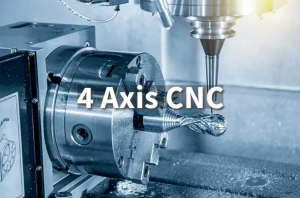
Valve components require a combination of CNC turning, milling, drilling, boring, threading, and grinding to achieve their final form. HLW utilizes CNC horizontal lathes, palletized 5-axis CNC mills, and 2/4-axis CNC equipment to perform the following core processes for valve part production:
- Turning/Cylindrical Machining: Shapes outer/inner cylindrical surfaces for stems, valve body bores, and disc components; ideal for creating precise diameters and lengths for slender parts like valve stems.
- Facing: Creates flat, perpendicular surfaces on workpiece ends for flanges, bonnets, and valve body mounting points.
- Drilling & Boring: Produces initial holes and enlarges precision internal cavities/ports for valve bodies, with live drilling enabling high-speed, accurate hole creation for aluminum components.
- Reaming & Lapping: Fine-tunes hole size and surface finish (down to Ra 0.2–0.4 µm for valve seats) for leak-tight sealing.
- Threading: Cuts internal/external threads for pipe connections, actuator mounts, and bonnet-body assemblies—including NPT threads with a precise 1°47′ taper angle.
- Grooving & Knurling: Creates surface grooves for seals and textured patterns for grip on manual valve components.
- Multi-Axis Milling: Machines complex 3D geometries (e.g., wedge-shaped gate valve discs, spherical globe valve bodies) in a single setup, reducing lead times and improving accuracy by eliminating multiple machine setups.
Palletized automation at HLW further optimizes these processes: our 5-axis CNC mills enable unattended manufacturing, machining multiple sides of a part in one setup, cutting setup time, and lowering production costs while maintaining strict precision.
CNC Machining for Critical Valve Components
Every valve assembly relies on precision-machined components working in tandem. Below is a breakdown of the CNC machining techniques, materials, and key considerations for the most essential valve parts, as implemented at HLW:
Valve Bodies
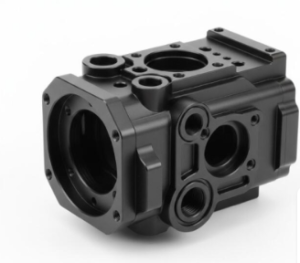
The primary structural component of any valve, the valve body houses internal passages, ports, and actuation features—making it the most complex valve part to machine. Valve bodies are typically machined from cast or forged blanks (carbon steel, stainless steel, or specialty alloys) and require a multi-step CNC process:
- Rough Turning/Milling: Removes excess material (800–1200 RPM spindle speed for 2-inch gate valve bodies).
- Drilling/Boring: Creates internal cavities with carbide drills (50–70 m/min cutting speed for 316 SS) and coolant to prevent work hardening.
- Threading: Mills NPT threads for piping connections (30–50 m/min cutting speed).
- Finish Milling: Achieves Ra 0.8–1.6 µm surface finish on flanges and sealing faces (100–150 m/min cutting speed).
Key Considerations: Rigid fixturing minimizes vibration; CMM (Coordinate Measuring Machine) inspections verify flange thickness (±0.02 mm) and port alignment; raw material is annealed to relieve internal stresses and inspected for porosity/inclusions.
HLW specializes in custom valve bodies for aerospace, defense, and industrial applications—designed for unique pressure ratings, flow paths, or form factors when off-the-shelf components fall short. We machine valve bodies from aluminum (lightweight/corrosion-resistant), titanium (high strength-to-weight for aerospace), stainless steel (chemical resistance), and specialty alloys (extreme temperature/pressure).
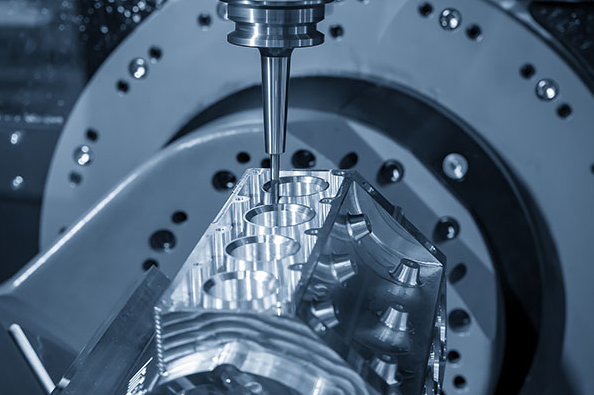
Valve Stems
Slender, precision components that transmit motion from actuators to discs/gates, valve stems require tight straightness and concentricity to prevent binding. Machined from 410 SS, 17-4 PH stainless steel, or high-strength alloys (for fatigue resistance), stem machining includes:
- Turning (80–120 m/min cutting speed for 10 mm 410 SS stems) with steady rests to minimize deflection.
- Single-point threading or thread milling for actuator connections (40–60 m/min for M10x1.5 metric threads).
- Keyway milling (±0.01 mm tolerance) for torque transmission.
- Polishing to Ra 0.4 µm on sealing surfaces via CNC grinding.
Valve Discs & Gates
Flow-control components with geometry tailored to valve type (wedge-shaped for gate valves, circular for butterfly valves), discs are machined from stainless steel, bronze, or coated materials (e.g., Stellite) for wear resistance. CNC processes include:
- Rough turning/milling (70–100 m/min for 4-inch butterfly valve discs).
- 5-axis profile milling for complex contours (±0.02 mm tolerance for sealing angles).
- Surface grinding to Ra 0.8 µm on sealing faces.
Key Consideration: Material compatibility with the valve body to prevent galvanic corrosion.
Valve Seats
The critical sealing interface between disc and valve body, seats require mirror-like surface finishes and precise concentricity. Integral seats (machined into the valve body) or separate seats are produced via:
- Boring (60–90 m/min for 3-inch ball valve seats).
- Profile turning (±0.01 mm tolerance for sealing diameter).
- Lapping with diamond paste to Ra 0.2–0.4 µm, verified via profilometer.
Key Consideration: Hardness matching between seat and disc to prevent wear and ensure uniform sealing pressure.
Valve Bonnets
Enclose internal valve components and seal the stem, bonnets are machined from materials matching the valve body (carbon steel/stainless steel) and include flanges, central stem bores, and packing glands. CNC processes:
- Turning (80–110 m/min for 6-inch bonnets) for outer diameters and flanges.
- Drilling/boring bolt holes and stem bores (±0.015 mm positional tolerance).
- Thread milling for body connections (40–60 m/min cutting speed).
- Finish milling flanges to Ra 1.6 µm.
CNC Machining for Industrial Valve Assemblies
HLW uses CNC technology to manufacture complete precision industrial valves, including the three most common types—gate valves, globe valves, and swing check valves—as well as ball valves, butterfly valves, wafer valves, and diaphragm valves for diverse applications (defense, oil and gas, food and beverage, water/wastewater, and aerospace).
Gate Valves
On/off valves for full fluid flow control, gate valves combine traditional metal forming with CNC machining for their wedge-shaped gates, flanged bodies, and bonnets. HLW produces CNC-machined gate valves in cast steel, forged steel, stainless steel, and bronze—including cryogenic, marine (ABS Type Approved), Mil-Spec, and API-6D pipeline variants (150lb to 2500lb pressure ratings).
Globe Valves
Flow-regulating/throttling valves with spherical bodies and internal baffles, globe valves require ultra-precise internal CNC machining for their restricted flow paths. HLW’s CNC-machined globe valves include angle valves, Y-pattern valves, cryogenic variants, and marine/Mil-Spec models (150lb to 2500lb).
Swing Check Valves
Non-return valves that prevent backflow, swing check valves rely on CNC-machined discs and hinge pins for unimpeded movement and reliable sealing. HLW manufactures cast/forged steel, stainless steel, and bronze swing check valves—including tilting disk, through conduit, and marine/Mil-Spec versions (150lb to 2500lb).
Specialized CNC Machining for Industry-Specific Valve Parts
HLW provides custom CNC machining solutions for valve parts tailored to niche industries, with a focus on oil and gas and aerospace/defense applications:
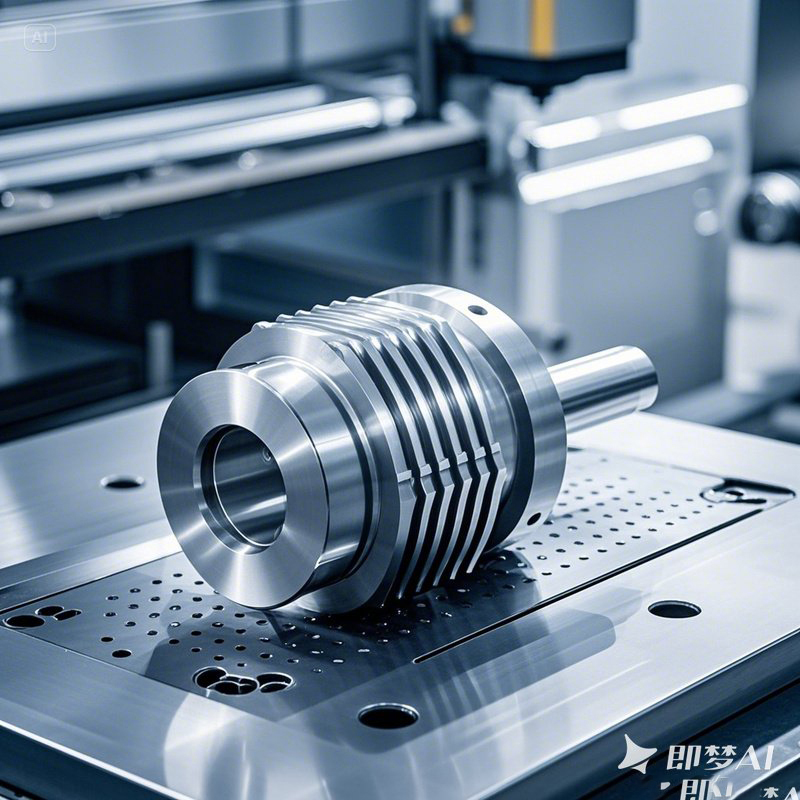
Oil Field Valve Components
Aluminum valve components for oil field applications require multi-featured CNC turning and milling—including OD turning, ID drilling/boring, threading, and slot milling. HLW machines these parts to ±0.005 tolerances with a 64 Ra surface finish (2.75″ OD/1.5″ ID dimensions), producing 100–300 pieces per order for just-in-time delivery. Live drilling enables high-speed machining of aluminum while maintaining precision, critical for oil field equipment reliability.
Aerospace/Defense Valve Bodies
Titanium valve bodies are the standard for aerospace and defense due to their high strength-to-weight ratio. HLW’s 5-axis CNC mills machine complex internal passages in titanium valve bodies without sacrificing strength, meeting the strict performance and compliance standards of aerospace fluid control systems.
CNC Machining for Castings & Forgings in Valve Manufacturing
Cast and forged blanks are the primary raw materials for valve bodies and heavy-duty valve components, and CNC machining is essential to remove excess material and achieve the tight tolerances required for valve operation. HLW uses CNC lathes and mills to machine cast/forged blanks for all valve types, with recent equipment investments (e.g., horizontal CNC mills with pallet changing) optimizing production efficiency:
- A wafer style check valve component, once processed in four operations on four machines, is now machined in one single operation—reducing part cost by 36% despite material price increases.
- For high-volume oil and gas valve body projects (10,000+ pieces), HLW uses multi-part fixturing (8 parts at once) and pallet changers to enable simultaneous machining and part changeover, cutting lead times and production costs for OEM partners.
HLW’s CNC Machining Process: From Design to Production
At HLW, we collaborate with customers at every stage of valve part development—from initial design to final production—leveraging CNC machining to enable rapid prototyping, design optimization, and a seamless transition to full production runs. Our process includes:
- Design Collaboration: Work with our engineering team to refine valve part designs for manufacturability, material selection, and performance.
- Material Selection: Choose from aluminum, stainless steel, titanium, carbon steel, and specialty alloys based on operating environment, pressure requirements, and industry compliance.
- CNC Programming: Translate 3D CAD drawings and customer prints into precision G-code for CNC machines.
- Automated Machining: Use palletized 5-axis mills, horizontal lathes, and 2/4-axis equipment for high-precision, unattended production.
- Rigorous Quality Control: In-process CMM inspections, profilometer surface finish checks, and roundness testing ensure every part meets customer and industry specifications.
- Just-In-Time Delivery: Fulfill small-batch (100–300 pieces) and high-volume (10,000+ pieces) orders with on-time delivery for valve OEMs and end-users.
With decades of experience in precision CNC machining, HLW is committed to continuous improvement, automation, and quality assurance—ensuring our valve parts perform reliably in the most demanding applications, from aerospace hydraulic systems to oil field pipelines and industrial fluid control.
Frequently Asked Questions (FAQ) About CNC Machining of Valve Parts
What materials are most commonly used for CNC-machined valve parts?
Valve parts are typically machined from carbon steel (ASTM A216 WCB), stainless steel (316 SS, 410 SS), aluminum alloys, titanium, bronze, and high-performance alloys (Hastelloy, Inconel). Material selection is based on corrosion resistance, strength, temperature/pressure tolerance, and industry application.
What tolerances can be achieved with CNC machining for valve parts?
Critical features (sealing surfaces, stem diameters, valve seat bores) achieve tolerances as tight as ±0.005 mm. Non-critical dimensions typically meet ±0.02 mm to ±0.05 mm tolerances, depending on material and component type.
How is surface finish controlled for valve sealing components?
Sealing surfaces (valve seats, discs, bonnet flanges) are finished via precision grinding and lapping. Valve seats achieve a Ra 0.2–0.4 µm finish with CNC lapping machines and diamond paste, verified by profilometers for consistency.
What challenges are faced in machining slender valve stems, and how are they resolved?
Slender stems are prone to deflection and vibration during machining. HLW mitigates this with steady rests to support the workpiece, low-cutting-force tooling, and high-precision CNC lathes. Coolant is also used to prevent thermal distortion during grinding.
Can HLW handle custom valve part designs for unique applications?
Yes. HLW specializes in custom CNC machined valve parts—including valve bodies, stems, and discs—for applications where off-the-shelf components do not meet pressure ratings, flow paths, material requirements, or form factor constraints. Our engineering team collaborates with customers to optimize custom designs for CNC manufacturability and performance.
Contact HLW for Your CNC Valve Machining Needs
Whether you require custom valve bodies for aerospace, oil field aluminum valve components, or high-volume CNC-machined industrial valves, HLW has the technology, expertise, and quality control to deliver precision parts that meet your exact specifications. With state-of-the-art CNC equipment, automated production, and a focus on customer collaboration, we are your trusted partner for all valve part machining needs.
Reach out today:
- Phone: +86 18664342076
- Email: info@helanwangsf.com
HLW—Precision CNC Machining for Valve Parts That Perform.