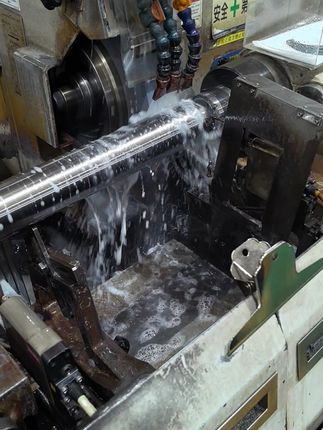
CNC Grinding
At HLW, we set the benchmark for precision manufacturing with our advanced CNC Grinding services. As a global leader in high-accuracy machining, we leverage cutting-edge grinding technology, engineered expertise, and rigorous quality control to deliver components that meet the most demanding industrial standards. CNC Grinding, a cornerstone of our service portfolio, uses computer-controlled abrasive processes to shape and finish materials with micron-level precision—ideal for applications where dimensional accuracy, surface quality, and material integrity are non-negotiable. From single prototypes to high-volume production, HLW’s CNC Grinding solutions cater to diverse industries, combining versatility, efficiency, and reliability to turn complex designs into high-performance parts.
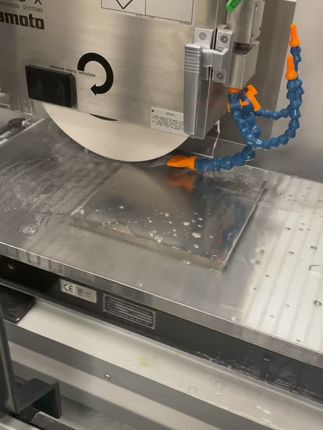
What Is CNC Grinding?
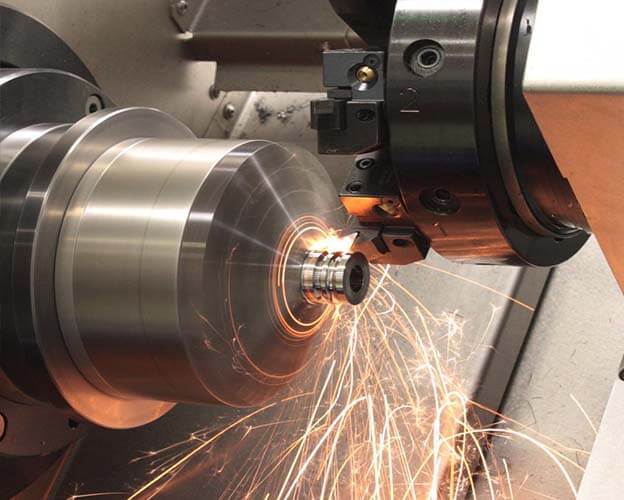
CNC Grinding (Computer Numerical Control Grinding) is a precision subtractive manufacturing process that uses rotating abrasive wheels to remove microscopic layers of material from a workpiece. Unlike conventional grinding, which relies on manual operator skill, CNC Grinding is automated via G-code programming and advanced control systems, ensuring consistent accuracy, repeatability, and scalability.
The core principle of CNC Grinding lies in the abrasive action of the wheel: sharp, industrial-grade abrasive grains (e.g., aluminum oxide, cubic boron nitride, diamond) on the wheel’s surface shear away material to create the desired shape, surface finish, or dimensional tolerance. This process excels at finishing hard, brittle, or heat-treated materials that are difficult to machine with traditional cutting tools (e.g., milling, turning).
Key Types of CNC Grinding Services by HLW
HLW offers a comprehensive range of CNC Grinding techniques to address diverse application needs:
- Surface Grinding: Creates flat, angular, or contoured external surfaces. Ideal for workpieces requiring tight parallelism or flatness (e.g., machine bases, mold plates).
- Cylindrical Grinding: Machines cylindrical/tubular components (external or internal) with high concentricity. Used for shafts, bearings, and hydraulic cylinders.
- Internal Grinding: Produces precision bores, holes, or internal contours in workpieces. Suitable for gun barrels, bushings, and mold cavities.
- Centerless Grinding: Processes cylindrical parts without fixturing—parts pass between two rotating wheels (grinding wheel + regulating wheel). Ideal for high-volume production of rods, tubes, or pins.
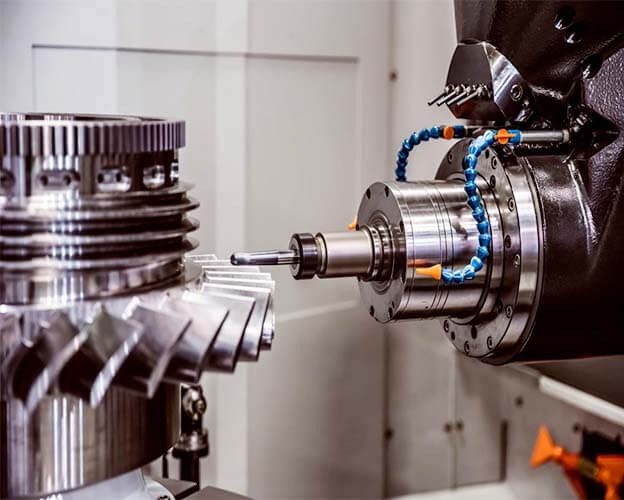
- Profile Grinding: Shapes complex, custom contours (e.g., turbine blades, camshafts) using form-ground wheels or multi-axis control.
- 5-Axis Grinding: Enables simultaneous control of five axes for intricate 3D geometries, critical for aerospace and medical components.
How HLW CNC Grinding Works: Technology & Workflow
HLW’s CNC Grinding process is a synergy of advanced hardware, intelligent software, and engineered precision. Below is a detailed breakdown of our technology, core components, and streamlined workflow:
Core Components of HLW’s CNC Grinding Systems
Our fleet of state-of-the-art grinding machines (including JUNKER, Studer, and FANUC-equipped systems) features critical components designed for maximum accuracy and efficiency:
- Abrasive Wheels: Custom-selected based on material and application:
- Aluminum oxide (Al₂O₃): Cost-effective for steel, cast iron, and non-ferrous metals.
- Cubic Boron Nitride (CBN): High wear resistance for hardened steels (up to 65 HRC) and superalloys.
- Diamond: Ideal for brittle materials (ceramics, glass, carbides) and precision finishing.
- CNC Controllers: Industry-leading FANUC 31i-B Plus and Siemens Sinumerik systems with:
- Nanometer resolution for ultra-precise positioning.
- Conversational programming (MANUAL GUIDE i) for quick setup.
- 3D simulation to validate tool paths and avoid collisions.
- Spindles: High-rigidity, low-vibration spindles (up to 60,000 RPM) with ceramic bearings, ensuring stable material removal and extended wheel life.
- Coolant Systems: High-pressure (up to 150 bar) temperature-controlled coolant (oil or water-based) to:
- Reduce thermal deformation of the workpiece.
- Flush away swarf (metal chips) and prevent wheel clogging.
- Extend tool life and improve surface finish.
- Automatic Wheel Dressers: In-line dressing systems (diamond or CBN dressers) that maintain wheel geometry and sharpness in real time, ensuring consistent quality across production runs.
- Workholding Fixtures: Precision chucks, collets, or magnetic tables that secure the workpiece without deformation—critical for thin-walled or delicate components.
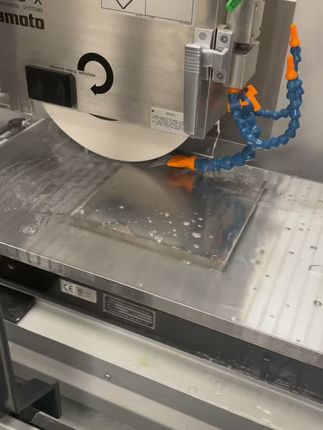
HLW’s Streamlined CNC Grinding Workflow
- Design & DFM Optimization: Clients submit CAD files (STEP, IGES, DXF). HLW’s engineers conduct Design for Manufacturability (DFM) analysis to optimize part geometry, select the right grinding method, and minimize cycle times.
- Programming: CAM software (Mastercam, HyperMill) generates G-code based on the design, defining wheel paths, feed rates, and cutting parameters. For complex parts, 5-axis programming ensures precise contouring.
- Setup & Calibration: The workpiece is clamped to the fixture, and the grinding wheel is mounted and dressed to the required shape. The machine is calibrated using laser interferometers to ensure spindle alignment and positioning accuracy.
- Grinding Execution: The CNC system executes the program, controlling wheel speed (1,000–60,000 RPM), feed rate (0.1–50 mm/min), and depth of cut (1–50 μm per pass). In-process monitoring tracks spindle vibration, coolant temperature, and wheel wear, with automatic adjustments to maintain tolerances.
- Multi-Pass Finishing: For ultra-precise parts, HLW performs multiple passes:
- Roughing: Removes excess material quickly (5–50 μm per pass).
- Semi-finishing: Refines geometry (1–5 μm per pass).
- Finishing: Achieves final tolerance and surface finish (0.1–1 μm per pass).
- Quality Inspection: Every part undergoes 100% inspection using:
- Coordinate Measuring Machines (CMMs) for dimensional accuracy.
- Surface roughness testers (profilometers) to verify Ra values.
- Laser scanners for geometric validation (e.g., cylindricity, flatness).
- First-Article Inspection (FAI) for all new orders.
Core Advantages of HLW CNC Grinding
HLW’s CNC Grinding services deliver tangible value that sets us apart from competitors—combining precision, efficiency, and versatility to solve complex manufacturing challenges:
1. Unmatched Precision & Repeatability
- Tolerance Capability: Achieves dimensional tolerances as tight as ±0.1 μm (0.000004 inches) and geometric tolerances (flatness, cylindricity) of <0.5 μm—exceeding ISO 2768-IT1 standards.
- Repeatability: Computerized control eliminates human error, ensuring part-to-part consistency with deviation rates <0.2 μm—critical for assembly-line production and interchangeable components.
- Surface Finish: Delivers mirror-like surfaces with Ra values as low as 0.05 μm (50 nm), eliminating the need for post-processing (e.g., polishing, lapping) in most applications.
2. Broad Material Compatibility
HLW’s CNC Grinding processes handle a wide range of materials, including hard, brittle, and heat-treated substrates—with customized parameters for each material’s unique properties:
| Material Category | Examples | HLW Machining Advantages |
|---|---|---|
| Metals & Alloys | Carbon steel, alloy steel, stainless steel (304/316), titanium, Inconel, Hastelloy, brass, copper | CBN/diamond wheels, controlled coolant temperature to prevent warping |
| Hardened Metals | Tool steel (H13, D2), hardened stainless steel (60–65 HRC) | Low-speed grinding with CBN wheels and adaptive feed rates to avoid cracking |
| Brittle Materials | Technical ceramics, carbides, optical glass, silicon wafers | Diamond wheels, low-pressure grinding, and anti-chatter fixturing to prevent breakage |
| Composites & Plastics | Carbon-fiber reinforced polymers (CFRP), PEEK, high-strength plastics | Non-abrasive wheel coatings and dust extraction systems to avoid delamination |
3. High Efficiency & Scalability
- Automation: 24/7 unattended operation with automatic loading/unloading robots and in-process monitoring reduces cycle times by up to 40% compared to manual grinding.
- High-Volume Production: Centerless grinding and batch processing capabilities handle 10,000+ parts per run with consistent quality.
- Low-Volume & Prototyping: Quick setup (24–48 hour turnaround) and flexible programming minimize tooling costs for small batches or custom parts.
4. Design Freedom for Complex Geometries
CNC Grinding excels at machining shapes that traditional methods cannot achieve:
- Sharp internal/external corners (down to 0.1 mm radius).
- Complex 3D contours (e.g., aerodynamic turbine blades, camshaft lobes).
- Micro-features (e.g., 0.5 mm diameter holes, 1 μm deep slots) for electronics and medical devices.
- Large-scale components (up to 6 meters in length) for industrial machinery.
5. Thermal Stability & Material Integrity
Since grinding removes minimal material per pass, HLW’s process generates low heat—preserving the workpiece’s metallurgical properties. Combined with temperature-controlled coolant systems, this eliminates thermal deformation, making it ideal for heat-treated or high-strength materials.
HLW CNC Grinding: Industry Applications
HLW’s CNC Grinding solutions are trusted by industries that demand uncompromising precision and reliability. Below are key sectors and their specific use cases:
1. Aerospace & Defense
- Components: Turbine blades, landing gear parts, jet engine shafts, hydraulic fittings, sensor housings.
- Requirements: Tolerances ±0.5 μm, resistance to extreme temperatures, and compliance with AS9100D standards.
- HLW Advantage: 5-axis grinding for complex aerodynamic profiles and traceability documentation (material certificates, inspection reports).
2. Automotive (High-Performance & EV)
- Components: Engine crankshafts, camshafts, bearing races, transmission gears, EV motor shafts, brake system components.
- Requirements: High wear resistance, tight fitment tolerances, and mass-production efficiency.
- HLW Advantage: Centerless grinding for high-volume shaft production and CBN wheels for hardened steel components.
3. Medical Devices
- Components: Surgical instruments (scalpels, forceps), orthopedic implants (titanium screws, hip joints), dental tools, diagnostic equipment parts.
- Requirements: Biocompatible surfaces (Ra ≤ 0.1 μm), sterile processing compatibility, and ISO 13485 certification.
- HLW Advantage: Cleanroom-compatible processes and diamond grinding for burr-free, corrosion-resistant finishes.
4. Electronics & Micro-Manufacturing
- Components: Semiconductor wafers, PCB fixtures, micro-connectors, sensor probes, optical lenses.
- Requirements: Miniature geometries (down to 0.1 mm), ultra-smooth surfaces, and no material contamination.
- HLW Advantage: Micro-grinding with 0.05 mm diameter wheels and vibration-dampened machines for precision.
5. Mold & Die Making
- Components: Injection mold inserts, stamping dies, extrusion dies, EDM electrodes.
- Requirements: Sharp corners, complex cavities, and durability for high-volume production.
- HLW Advantage: Profile grinding with ±0.1 μm tolerance, ensuring consistent part replication.
6. Energy & Industrial Machinery
- Components: Turbine shafts, generator parts, pump housings, linear guides, measuring tools.
- Requirements: High fatigue strength, corrosion resistance, and dimensional stability.
- HLW Advantage: Grinding of large-scale components (up to 6 meters) and specialty alloys (Inconel, Hastelloy) for extreme environments.
CNC Grinding vs. Other Machining Methods: A Comparative Analysis
HLW helps clients select the optimal machining method for their needs. Below is a detailed comparison of CNC Grinding with common alternatives:
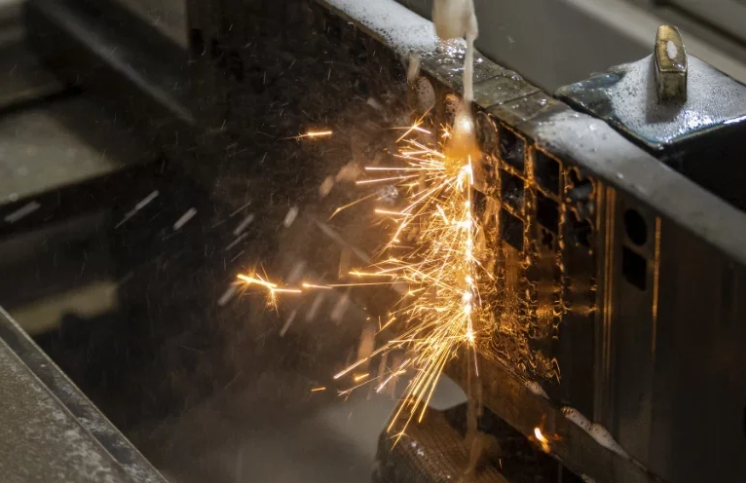
| Feature | CNC Grinding (HLW) | CNC глодање | Wire EDM | Laser Cutting |
|---|---|---|---|---|
| Material Removal Method | Abrasive cutting (micro-layer removal) | Mechanical cutting (chip removal) | Electrical discharge (erosion) | Thermal cutting (melting/vaporization) |
| Tolerance Range | ±0.1–±5 μm | ±5–±20 μm | ±0.5–±2 μm | ±10–±50 μm |
| Surface Finish (Ra) | 0.05–0.8 μm | 0.8–3.2 μm | 0.08–0.4 μm | 1.6–6.3 μm |
| Material Compatibility | Metals, ceramics, glass, composites (hard/brittle materials excel) | Metals, plastics, wood (soft-to-medium hardness) | Conductive metals only | Metals, plastics, composites (non-brittle materials) |
| Complexity | Ideal for sharp corners, 3D contours, micro-features | Limited by tool radius (rounded corners) | Ideal for internal contours, hardened metals | Good for 2D cuts, poor for sharp corners |
| Speed | Medium (10–500 mm²/min) | Fast (100–1,000 mm²/min) | Slow (10–200 mm²/min) | Very fast (500–5,000 mm²/min) |
| Best For | Precision finishing, hard materials, complex geometries | General-purpose machining, high-volume 3D parts | Conductive metals, tight-tolerance internal cuts | Large batches, 2D parts, non-conductive materials |
HLW’s Quality Assurance & Certifications
Quality is the foundation of HLW’s operations. Our CNC Grinding services are backed by industry-leading certifications and rigorous quality control protocols:
- Certifications: ISO 9001:2015 (general manufacturing), AS9100D (aerospace), ISO 13485 (medical devices), and RoHS/REACH compliance for electronics.
- Statistical Process Control (SPC): Real-time monitoring of grinding parameters (spindle speed, feed rate, coolant temperature) to identify and correct deviations before they affect quality.
- Non-Destructive Testing (NDT): Ultrasonic testing (UT) and magnetic particle inspection (MPI) for critical components to detect internal defects.
- Full Traceability: Each part is labeled with a unique serial number, linking to raw material batches, production data, and inspection reports—ensuring end-to-end accountability.
- Machine Calibration: Annual calibration by accredited third parties to maintain spindle accuracy, wheel alignment, and positioning precision.
Get a Quote for Your CNC Grinding Project
Ready to leverage HLW’s ultra-precision CNC Grinding services? Here’s how to get started:
- Submit Your Design: Send CAD files (STEP, IGES, DXF, or STL) to cnc-grinding-quote@hlw-machining.com.
- Provide Project Details: Include:
- Material specifications (type, hardness, dimensions).
- Quantity (prototyping, low-volume, or high-volume).
- Tolerance and surface finish requirements (e.g., ±0.5 μm, Ra 0.1 μm).
- Post-processing needs (e.g., heat treatment, plating, cleaning).
- Delivery timeline and certification requirements (e.g., AS9100, ISO 13485).
- Receive a Custom Quote: Our engineering team will review your request and provide a detailed quote within 12 hours (standard projects) or 24 hours (complex designs).
- Free DFM Consultation: We offer complimentary design optimization to reduce costs, improve lead times, and ensure manufacturability.
For urgent inquiries or technical support, contact our sales engineering team at +1-XXX-HLW-GRIND (or your regional contact number)—we’re available 24/7 to support your project.
At HLW, we don’t just grind parts—we deliver precision you can trust, backed by expertise that transforms complex challenges into seamless solutions. Partner with us for CNC Grinding that elevates your manufacturing capabilities.
Contact us today: info@helanwangsf.com | https://helanwangsf.com/