
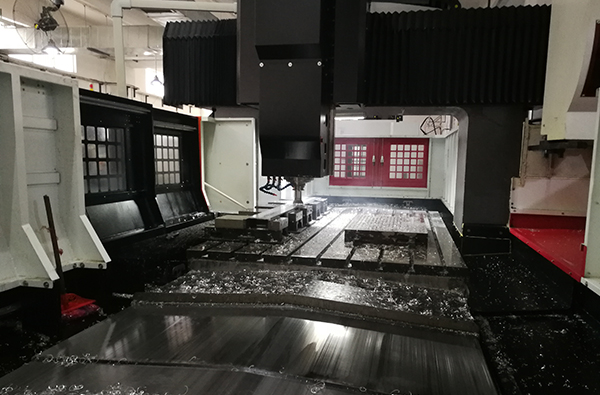
CNC тээрэмдэх
CNC тээрэмдэх
CNC milling stands as a cornerstone of modern precision manufacturing, enabling the creation of complex geometries, intricate features, and high-accuracy parts across industries. At HLW, we elevate this technology with state-of-the-art equipment, engineering expertise, and customer-centric solutions—catering to rapid prototyping, low-volume production, and custom manufacturing needs. As a leading provider of CNC milling services, HLW combines advanced multi-axis machining capabilities with rigorous quality control to transform your digital designs into physical reality, delivering parts that meet the most demanding specifications. Below is a comprehensive exploration of CNC milling, its technical nuances, and HLW’s unique offerings.
1. What Is CNC Milling?
CNC milling is a subtractive manufacturing process that uses computer-controlled cutting tools to remove material from a solid workpiece (metal, plastic, or composite) and shape it into a desired form. Guided by CAD (Computer-Aided Design) or CAM (Computer-Aided Manufacturing) files, the process leverages precise, automated movements of the workpiece and cutting tools to achieve consistent, repeatable results—far exceeding the capabilities of manual milling. At its core, CNC milling relies on two key components:
- Workholding System: The workpiece is secured in a rigid vice, fixture, or custom holding device mounted on a programmable worktable. This table can rotate, pivot, or translate across multiple axes to position the material optimally for cutting.
- Cutting Assembly: A rotating spindle houses cutting tools (endmills, drills, chamfer tools, etc.) that remove material through rotational motion. The spindle’s speed, feed rate, and tool path are precisely controlled by CNC software to ensure accuracy.
Unlike traditional milling, CNC milling eliminates human error, enabling the production of complex features—such as angled surfaces, slots, channels, pockets, curves, and undercuts—that would be impractical or impossible with manual methods.
2. HLW’s CNC Milling Equipment & Technical Capabilities
HLW invests in world-class machining infrastructure to deliver unmatched precision and versatility. Our facility is equipped with over 40 imported multi-axis CNC milling centers from leading global manufacturers (including Doosan, Fanuc, and other premium brands) sourced from Japan and South Korea—ensuring reliability, performance, and cutting-edge technology. We offer both vertical and horizontal milling configurations, as well as 3-axis, 4-axis, and 5-axis machining capabilities to address projects of varying complexity:
2.1 Axis Configurations & Their Applications
| Axis Configuration | Key Movements | Ideal For |
|---|---|---|
| 3-Axis Milling | X (horizontal), Y (horizontal), Z (vertical) axes | Simple prismatic parts, flat surfaces, basic holes/slots (e.g., brackets, enclosures, fasteners) |
| 4-Axis Milling | X/Y/Z axes + A-axis (rotation around X) | Parts with angled features, cylindrical components, or multi-sided machining (e.g., turbine blades, automotive housings) |
| 5-Axis Milling | X/Y/Z axes + A-axis (X-rotation) + B-axis (Y-rotation) | Complex 3D geometries, undercuts, and parts requiring multi-angle tool access (e.g., aerospace components, medical implants, custom molds) |
2.2 Core Equipment Features
- High-Speed Spindles: Rotational speeds up to 24,000 RPM for efficient material removal, reducing cycle times while maintaining surface finish quality.
- Automated Tool Changers: Quick-change tool systems (16–40 tool stations) minimize downtime between operations, ideal for complex parts requiring multiple tools.
- Advanced CNC Controllers: Fanuc and Siemens controllers with intuitive interfaces, supporting CAD/CAM file formats (STEP, IGES, STL, DXF) and enabling real-time process monitoring.
- Rigid Machine Frames: Heavy-duty construction reduces vibration during high-speed cutting, ensuring dimensional stability and precision—critical for tight-tolerance parts.
3. Material Compatibility: What Can Be CNC Milled?
HLW’s CNC milling services support a wide range of rigid, stable materials—with expertise in optimizing cutting parameters for each substrate to maximize quality and efficiency. Below is our comprehensive material portfolio, along with key considerations for machining:
3.1 Metals
- Aluminum Alloys: 6061-T6 (versatile, lightweight), 7075-T6 (high-strength), 2024-T3 (fatigue-resistant)—ideal for aerospace, automotive, and electronic parts.
- Steel Alloys: 1018 (low-carbon, cost-effective), 4140 (alloy steel, durable), 304/316 stainless steel (corrosion-resistant), D2 tool steel (wear-resistant)—used in tools, structural components, and industrial equipment.
- Copper & Brass: Copper 110 (high conductivity), Brass 260/360 (machinable, corrosion-resistant)—for connectors, valves, and decorative parts.
- Exotic Metals: Titanium Grade 5 (biocompatible, high strength-to-weight ratio)—used in medical implants and aerospace components (requires specialty cutting tools).
3.2 Plastics & Polymers
- Инженерийн хуванцар: ABS (impact-resistant), Polycarbonate (PC, shatterproof), PEEK (high-temperature resistance), Nylon (wear-resistant)—for consumer electronics, medical devices, and industrial parts.
- High-Performance Plastics: PTFE (Teflon, non-stick), Acrylic (transparent), POM (low friction)—suitable for seals, gaskets, and precision components.
3.3 Materials to Avoid (and Why)
- Hardened Steels (HRC > 55): May require specialized carbide tools and slower cutting speeds, increasing lead time and cost.
- Soft Elastomers/Plastics (e.g., silicone, low-density rubber): Prone to deformation under cutting pressure or inability to be securely held in fixtures.
- Brittle Materials (e.g., glass, ceramics): High risk of cracking during machining (HLW offers alternative processes for such substrates upon consultation).
3.4 Custom Material Sourcing
Beyond our standard stock list, HLW provides custom raw material sourcing—including pre-hardened metals, food-grade plastics, and biocompatible substrates—to meet unique project requirements. Our engineering team collaborates with trusted suppliers to ensure material quality and traceability.
4. How CNC Milling Works: HLW’s Streamlined Process
HLW follows a structured, optimized workflow to deliver fast, accurate results—from design to finished part. Our process ensures transparency, quality, and efficiency at every step:
- Design Consultation & DFM Optimization:
- Receive your CAD/CAM files and project specifications (quantity, tolerances, finish, material).
- Our engineering team conducts Design for Manufacturability (DFM) reviews to identify opportunities to simplify tool paths, reduce waste, and lower costs—without compromising design intent.
- Programming & Tool Selection:
- CAM software translates your design into machine-readable G-code, optimizing tool paths for speed and precision.
- Select appropriate cutting tools (carbide, high-speed steel) based on material and part features (e.g., endmills for slots, drills for holes, ball-nose tools for curved surfaces).
- Setup & Machining:
- Secure the workpiece in a custom fixture or vice to prevent movement during cutting.
- Load tools into the automated tool changer and calibrate the machine (spindle speed, feed rate, depth of cut).
- Launch the machining process, with real-time monitoring via CNC controllers to detect anomalies (e.g., tool wear, material misalignment).
- Quality Inspection:
- Post-machining inspection using coordinate measuring machines (CMMs), optical scanners, and micrometers to verify dimensional accuracy against CAD specifications.
- Surface finish testing (Ra/Rz measurements) to ensure compliance with customer requirements (e.g., smooth finishes for medical devices).
- Finishing & Delivery:
- Optional post-processing: Deburring, anodizing, painting, plating, or heat treatment.
- Secure packaging and on-time delivery (local and international shipping options available).
5. Key Advantages of CNC Milling (Why Choose HLW?)
CNC milling offers unparalleled benefits for precision manufacturing—and HLW amplifies these advantages with our technical expertise and customer-focused approach:
5.1 Ultra-High Precision & Repeatability
- Tolerances as tight as ±0.005 mm (0.0002 inches) for metals and ±0.01 mm for plastics, adhering to DIN 2768-1-fine standards.
- Consistent results across production runs (1–10,000+ parts), ensuring every component matches your CAD design—critical for assembly and performance.
5.2 Versatility for Complex Designs
- 5-axis machining enables access to all sides of the workpiece, eliminating the need for multiple setups and reducing the risk of errors.
- Capable of producing intricate features: undercuts, curved surfaces, threaded holes, and custom contours—ideal for prototypes and low-volume production.
5.3 Efficiency & Fast Turnaround
- Minimal setup time (CAD files translated to finished parts in hours) and automated tool changes reduce lead times—HLW delivers prototypes in 1–3 days and low-volume production in 5–7 days.
- High-speed material removal (up to 500 cm³/min for aluminum) minimizes cycle times, even for large workpieces.
5.4 Cost-Effectiveness
- No need for expensive custom molds or dies, making CNC milling ideal for small batches and custom projects.
- Low material waste (optimized tool paths reduce scrap) and competitive pricing for both prototypes and low-volume runs.
5.5 HLW’s Unique Value Adds
- Dedicated project managers for end-to-end support, from quote to delivery.
- In-house engineering expertise to resolve design challenges and optimize processes.
- Flexible production scalability: Seamlessly transition from 1-piece prototypes to 10,000-unit low-volume runs without retooling.
6. Industry Applications of HLW’s CNC Milling Services
CNC milling is integral to nearly every sector requiring precision parts—and HLW’s services are tailored to meet industry-specific demands:
- Aerospace: Complex structural components (wing spars, engine brackets), turbine blades, and avionics enclosures (requires 5-axis machining and tight tolerances).
- Automotive: Transmission gears, brake calipers, custom performance parts (e.g., racing headers) and electronic housings.
- Medical & Dental: Biocompatible implants (titanium hip stems, dental crowns), surgical instruments (scalpels, forceps), and diagnostic equipment components.
- Electronics: Precision connectors, heat sinks for microchips, and smartphone/tablet enclosures (requires high surface finish and dimensional accuracy).
- Industrial Equipment: Hydraulic cylinders, gearboxes, and custom fixtures (durable, wear-resistant materials).
- Consumer Goods: High-end watch parts, bicycle components, and custom furniture hardware.
7. Quality Assurance & Compliance
At HLW, quality is non-negotiable. Our CNC milling services adhere to global standards and rigorous quality control processes:
- Certifications: ISO 9001:2015 (quality management system) and ISO 13485 (for medical device components), ensuring compliance with industry regulations.
- In-Process Inspection: Real-time monitoring of cutting parameters and periodic dimensional checks to catch deviations early.
- Traceability: Full documentation of material certifications, machining parameters, and inspection results for every project—critical for aerospace, medical, and defense applications.
- Continuous Improvement: Regular equipment calibration, staff training, and process optimization to maintain and enhance precision.
8. Get a Quote for Your CNC Milling Project
HLW makes it easy to bring your design to life. To request a custom quote, follow these simple steps:
- Submit your CAD/CAM files (STEP, IGES, STL, DXF) to quote@hlw-machining.com.
- Include key details:
- Desired material (or let us recommend options).
- Quantity (prototypes, low-volume production).
- Tolerance requirements.
- Post-processing needs (deburring, anodizing, plating).
- Delivery timeline.
Our team will review your project within 24 hours and provide a competitive quote, along with DFM recommendations to optimize cost and quality. For urgent projects or technical questions, contact our engineering team directly at +1-XXX-HLW-MILL (or your regional contact).
Conclusion
CNC milling is more than a manufacturing process—it’s a solution for turning innovative designs into high-quality, functional parts. At HLW, we combine advanced multi-axis equipment, material expertise, and a customer-centric approach to deliver CNC milling services that exceed expectations. Whether you need a single prototype, low-volume production, or custom components for critical applications, HLW is your trusted partner for precision, versatility, and speed. Choose HLW for your CNC milling needs—and experience the difference that engineering excellence and cutting-edge technology can make. Contact us today: info@helanwangsf.com | https://helanwangsf.com/