CNC Wire EDM
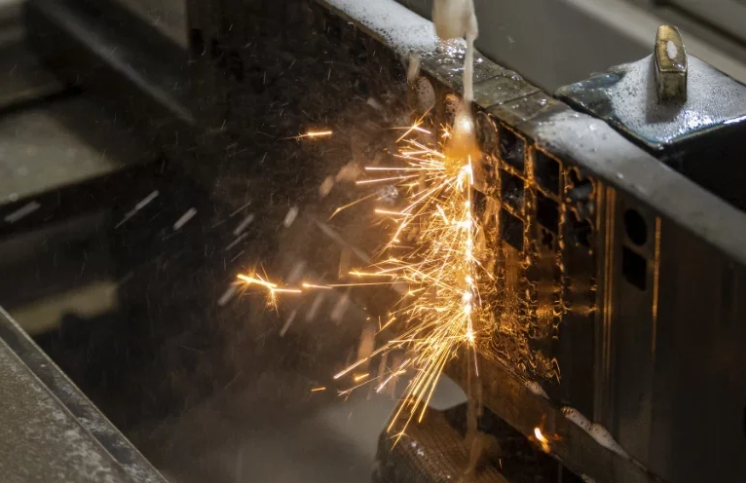
At HLW, we redefine the standards of high-precision manufacturing with our state-of-the-art CNC Wire EDM (Electrical Discharge Machining) services. As a global leader in precision machining, we leverage advanced Wire EDM technology to deliver complex, tight-tolerance components that meet the most demanding requirements of industries ranging from aerospace and medical devices to mold-making and electronics. Unlike traditional subtractive machining, our CNC Wire EDM processes rely on controlled electrical discharges—no physical contact, no material stress, and unparalleled accuracy. Combined with HLW’s engineering expertise, rigorous quality control, and customer-centric approach, we transform challenging designs into high-performance parts that drive innovation.
What Is CNC Wire EDM?
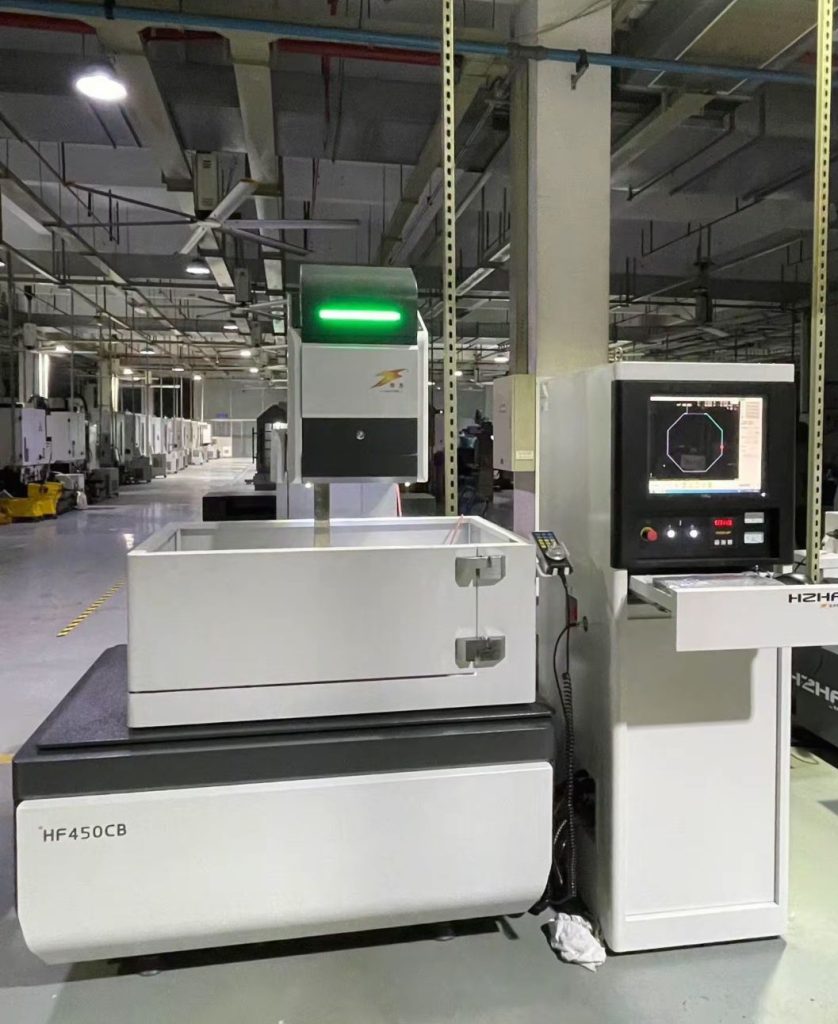
CNC Wire EDM (Wire Electrical Discharge Machining) is a non-contact subtractive manufacturing process that erodes conductive materials using high-frequency electrical sparks between a thin, continuously fed electrode wire and the workpiece. Unlike conventional machining (e.g., milling, turning) that relies on physical cutting tools, Wire EDM uses thermal energy from electrical discharges to remove microscopic particles of material, enabling the creation of intricate geometries and ultra-tight tolerances.
Key Classifications of Wire EDM (HLW’s Focus)
HLW specializes in Slow Wire EDM (SWEDM)—the gold standard for precision—alongside advanced Medium Wire EDM systems, tailored to different project needs:
- Slow Wire EDM (SWEDM): Features multiple cuts (roughing + finishing), deionized water circulation, and high-precision wire tension control. Ideal for ultra-tight tolerances (±0.0005mm) and superior surface finishes (Ra ≤ 0.1μm).
- Medium Wire EDM: Balances speed and precision, suitable for mid-volume production with tolerances of ±0.002mm and surface finishes of Ra ≤ 0.4μm.
Both technologies share core advantages: no mechanical force, compatibility with hardened materials, and the ability to cut complex internal/external profiles—making them irreplaceable for applications where traditional machining falls short.
How HLW CNC Wire EDM Works: A Technical Deep Dive
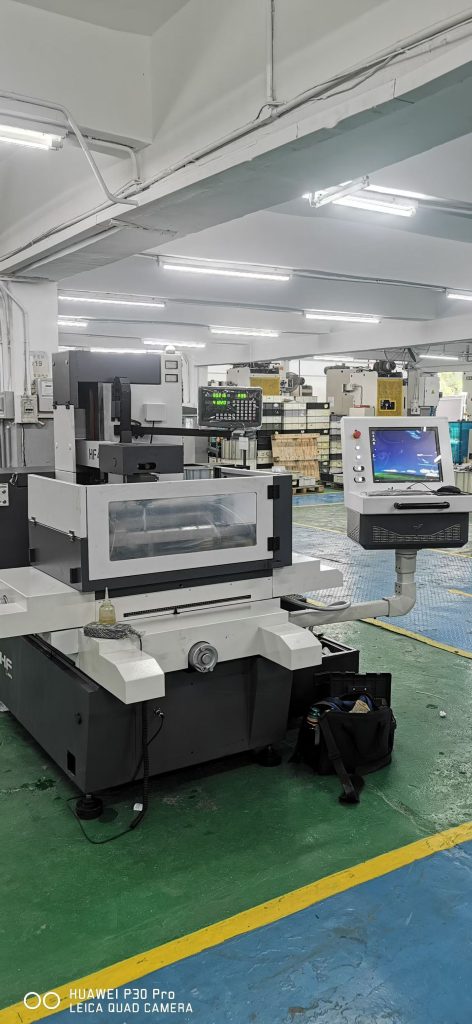
HLW’s CNC Wire EDM process is a synergy of advanced hardware, software, and engineering precision. Below is a detailed breakdown of the technology, components, and workflow:
Core Components of HLW’s Wire EDM Systems
Our fleet of industry-leading Wire EDM machines (including Sodick AQ series and Makino U32i) is equipped with critical components that ensure consistency and accuracy:
- Electrode Wire: HLW uses high-performance wires (0.05–0.3mm diameter) tailored to material and application:
- Copper/brass wire: Cost-effective for general-purpose cutting (steel, aluminum).
- Molybdenum wire: High tensile strength for precision cutting of thick workpieces.
- Zinc-coated brass wire: Enhanced spark efficiency and wear resistance for high-speed finishing.
- Diamond Guides: Ensure wire straightness and stability, minimizing deflection even during complex cuts.
- Deionized Water System: Filters and circulates deionized water at 15–25°C to:
- Cool the workpiece and wire (preventing thermal deformation).
- Flush away eroded material particles (avoiding re-deposition).
- Insulate the gap between wire and workpiece (enabling controlled discharges).
- CNC Control System: Fanuc 31i-B or Siemens Sinumerik controllers with 3D simulation, adaptive feed rate adjustment, and G-code optimization. Supports 4-axis and 5-axis 联动 (multi-axis machining) for non-symmetrical parts.
- Automatic Wire Threading (AWT): Enables unattended operation (24/7) with thread recovery in <10 seconds—critical for high-volume production and complex parts with multiple cuts.
Step-by-Step Machining Workflow
- Design & Programming: Clients submit CAD files (STEP, IGES, DXF, or STL). HLW’s engineers conduct Design for Manufacturability (DFM) analysis to optimize toolpaths, minimize wire wear, and reduce cycle times. CAM software (e.g., Mastercam WireEDM) generates precise G-code for the CNC system.
- Setup: The workpiece (conductive material) is clamped to a precision fixture, and the electrode wire is threaded through diamond guides. The work area is submerged in deionized water.
- Electrical Discharge Initiation: A high-voltage (100–300V) pulse is applied between the wire (cathode) and workpiece (anode), creating a plasma channel in the gap (0.02–0.05mm). Each spark (1–10μs duration) generates temperatures up to 10,000°C, vaporizing and eroding tiny material particles.
- Controlled Movement: The CNC system guides the wire along the programmed path, adjusting feed rates (0.1–50mm/min) based on material thickness and complexity. Multi-axis machines tilt the wire (up to ±30°) for tapered cuts or 3D contours.
- Multi-Cut Finishing: For SWEDM projects, HLW performs 2–5 cuts:
- Roughing cut: Removes 90% of excess material (fast, moderate precision).
- Semi-finishing cut: Refines geometry (tolerance ±0.002mm).
- Finishing cuts: Achieves final tolerance (±0.0005mm) and surface finish (Ra ≤ 0.1μm).
- Quality Inspection: Parts undergo 100% inspection using coordinate measuring machines (CMMs), optical comparators, and surface roughness testers. First-Article Inspection (FAI) is provided for all new orders.
Core Advantages of HLW CNC Wire EDM
HLW’s Wire EDM services stand out for their precision, versatility, and reliability—addressing pain points that traditional machining cannot solve:
1. Ultra-Tight Tolerances & Superior Surface Finish
- Tolerance Range: ±0.0005mm (0.5μm) for SWEDM; ±0.002mm for medium Wire EDM—exceeding industry standards (ISO 2768-IT1).
- Surface Finish: Ra values as low as 0.08μm (mirror finish) for medical and aerospace components, eliminating the need for post-processing (e.g., grinding, polishing).
2. No Mechanical Stress or Material Deformation
Since there is no physical contact between the wire and workpiece, HLW’s Wire EDM process:
- Avoids tool marks, burrs, and residual stress—critical for thin-walled parts (down to 0.1mm thickness) and brittle materials.
- Preserves material integrity, making it ideal for heat-treated or hardened components (up to 65 HRC).
3. Unmatched Complexity & Design Freedom
Wire EDM excels at cutting geometries that are impossible with traditional tools:
- Sharp internal corners (0° radius, limited only by wire diameter).
- Intricate contours, slots, and cavities (e.g., mold inserts, micro-components).
- Tapered cuts (0–30°) and 3D profiles (e.g., aerospace turbine blades).
- Blind holes and internal features with no access restrictions.
4. Broad Material Compatibility (Conductive Materials)
HLW’s Wire EDM processes handle all conductive materials, regardless of hardness:
| Material Category | Examples | HLW Machining Advantages |
|---|---|---|
| High-Strength Alloys | Titanium (Ti-6Al-4V), Inconel 718, Hastelloy | Slow cutting speeds and adaptive pulse control to prevent material cracking |
| Tool Steels & Hardened Metals | H13, D2, 440C stainless steel (60–65 HRC) | No pre-machining required—cuts hardened materials directly |
| Copper & Brass | Oxygen-free copper, naval brass | High spark efficiency for fast, precise cuts |
| Aluminum Alloys | 6061, 7075 | Low thermal distortion with temperature-controlled coolant |
| Composite Conductors | Carbon-fiber reinforced polymers (CFRP) with conductive cores | Specialized fixturing to avoid delamination |
Note: HLW does not process non-conductive materials (e.g., plastic, glass, wood). For these, we recommend our laser cutting or waterjet services.
5. Scalability for All Production Volumes
- Prototyping: Fast setup (24–48 hour turnaround) and low tooling costs for small batches (1–10 parts).
- High-Volume Production: Unattended operation with AWT and robotic part loaders, reducing cycle times by up to 40% compared to manual setups.
- Custom Runs: Flexible programming for unique designs, with no minimum order quantity (MOQ).
Limitations of CNC Wire EDM (And How HLW Mitigates Them)
While Wire EDM is unmatched for precision, it has inherent limitations—ones HLW addresses with technical expertise:
- Slower Machining Speed: Typical cutting rates range from 10–200 mm²/min (depending on material and thickness). HLW optimizes this with:
- High-efficiency pulse generators (reducing spark duration).
- Batch processing and 24/7 operation.
- Hybrid approaches (e.g., roughing with milling, finishing with Wire EDM).
- Higher Operational Costs: Consumables (wire, filters, deionized water) and energy consumption add to costs. HLW offsets this with:
- Wire recycling systems (reducing waste by 30%).
- Energy-efficient machines (IE4-rated motors).
- Volume discounts for high-production orders.
- Conductive Material Requirement: For non-conductive parts, HLW offers complementary services (laser, waterjet) and can advise on material substitutions (e.g., conductive coatings).
HLW CNC Wire EDM: Industry Applications
HLW’s Wire EDM parts are trusted by industries that demand uncompromising precision:
1. Aerospace & Defense
- Components: Turbine blades, fuel injector nozzles, sensor housings, aircraft fasteners.
- Requirements: Tolerances ±0.001mm, resistance to high temperatures, and compliance with AS9100 standards.
- HLW Advantage: 5-axis Wire EDM for complex 3D profiles and traceability documentation (material certificates, inspection reports).
2. Medical Devices
- Components: Surgical instruments (scalpels, forceps), implantable parts (titanium screws, orthodontic brackets), diagnostic equipment housings.
- Requirements: Biocompatible materials, mirror finishes (Ra ≤ 0.1μm), and ISO 13485 certification.
- HLW Advantage: Cleanroom-compatible processes and non-contaminating coolant systems.
3. Mold & Die Making
- Components: Injection mold inserts, stamping dies, extrusion dies, EDM electrodes.
- Requirements: Sharp corners, complex cavities, and durability for high-volume production.
- HLW Advantage: SWEDM for mold inserts with ±0.0005mm tolerance, ensuring consistent part replication.
4. Electronics & Micro-Manufacturing
- Components: Micro-connectors, sensor probes, semiconductor packaging tools, PCB fixtures.
- Requirements: Miniature geometries (down to 0.1mm), high repeatability, and no material deformation.
- HLW Advantage: Ultra-fine wire (0.05mm diameter) and micro-EDM capabilities for sub-millimeter features.
5. Automotive (High-Performance)
- Components: Transmission gears, fuel system components, electric vehicle (EV) motor parts.
- Requirements: Resistance to wear, tight tolerances for fitment, and cost efficiency.
- HLW Advantage: Medium Wire EDM for high-volume production with consistent quality.
CNC Wire EDM vs. Other Machining Methods: A Comparative Analysis
HLW helps clients choose the right machining method for their needs. Below is a detailed comparison of Wire EDM with common alternatives:
| Feature | CNC Wire EDM (HLW) | CNC frézovanie | Laser Cutting | Waterjet Cutting |
|---|---|---|---|---|
| Contact Method | Non-contact (electrical discharge) | Physical cutting | Non-contact (thermal) | Non-contact (abrasive jet) |
| Material Compatibility | Conductive materials only | Most materials (metals, plastics, wood) | Metals, plastics, composites | Almost all materials (metals, stone, glass) |
| Tolerance | ±0.0005–±0.002mm | ±0.005–±0.01mm | ±0.01–±0.05mm | ±0.02–±0.1mm |
| Surface Finish | Ra 0.08–0.4μm (burr-free) | Ra 0.8–3.2μm (may need finishing) | Ra 1.6–6.3μm (heat-affected zone) | Ra 0.8–2.4μm (minimal HAZ) |
| Complexity | Ideal for sharp corners, 3D contours | Limited by tool radius (rounded corners) | Good for 2D contours, poor for sharp corners | Good for thick materials, limited by jet width |
| Speed | Slow (10–200 mm²/min) | Fast (100–1,000 mm²/min) | Very fast (500–5,000 mm²/min) | Medium (50–300 mm²/min) |
| Best For | Precision, complex parts (aerospace, medical) | General-purpose machining, high-volume | Large batches, 2D parts | Thick materials, non-conductive parts |
HLW’s Quality Assurance & Certifications
Quality is the foundation of HLW’s operations. Our CNC Wire EDM services are backed by:
- Certifications: ISO 9001:2015 (general manufacturing), AS9100D (aerospace), ISO 13485 (medical devices).
- Statistical Process Control (SPC): Real-time monitoring of spark frequency, wire tension, and coolant temperature to maintain consistency.
- Non-Destructive Testing (NDT): Ultrasonic testing (UT) and X-ray inspection for critical components.
- Full Traceability: Each part is labeled with a unique serial number, linking to raw material batches, production data, and inspection reports.
- Machine Calibration: Annual calibration by accredited third parties to ensure spindle accuracy and wire alignment.
Get a Quote for Your CNC Wire EDM Project
Ready to leverage HLW’s ultra-precision CNC Wire EDM services? Here’s how to get started:
- Submit Your Design: Send CAD files (STEP, IGES, DXF, or STL) to wire-edm-quote@hlw-machining.com.
- Provide Project Details: Include:
- Material specifications (type, hardness, thickness).
- Quantity (prototyping, low-volume, or high-volume).
- Tolerance and surface finish requirements (e.g., ±0.001mm, Ra 0.1μm).
- Post-processing needs (e.g., heat treatment, plating, cleaning).
- Delivery timeline and certification requirements (e.g., AS9100, ISO 13485).
- Receive a Custom Quote: Our engineering team will review your request and provide a detailed quote within 12 hours (standard projects) or 24 hours (complex designs).
- Free DFM Consultation: We offer complimentary design optimization to reduce costs, improve lead times, and ensure manufacturability.
For urgent inquiries or technical support, contact our sales engineering team at +86-18664342076 (or your regional contact number)—we’re available 24/7 to support your project.
At HLW, we don’t just machine parts—we deliver precision you can trust, backed by expertise that matters. Partner with us for CNC Wire EDM solutions that turn your most challenging designs into reality.
Contact us today: info@helanwangsf.com | https://helanwangsf.com/