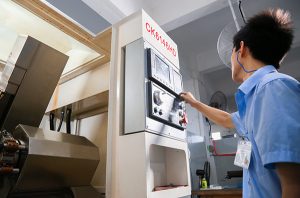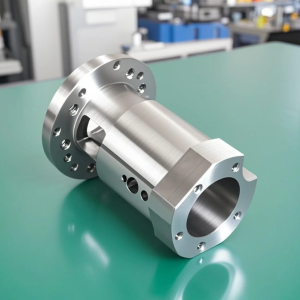
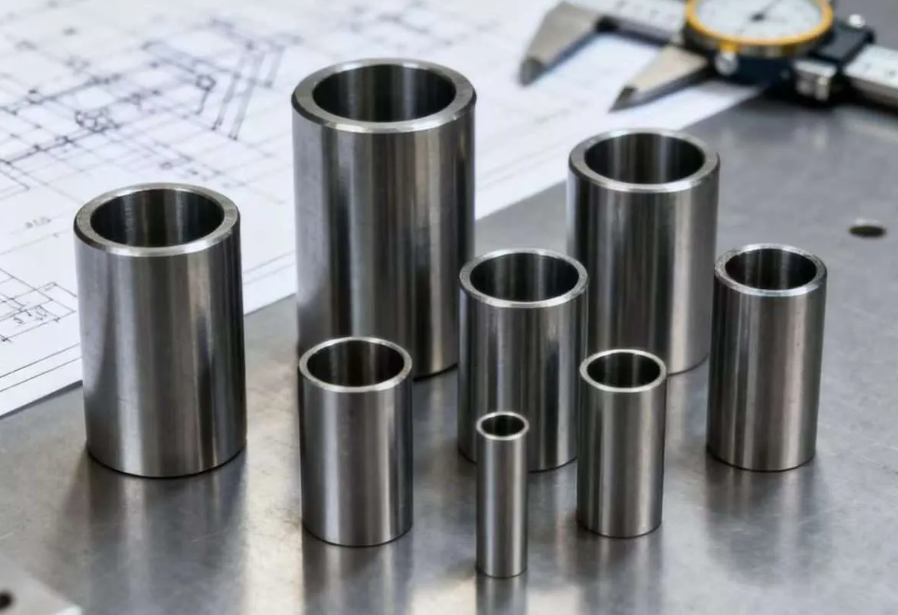
Sliding sleeves, also known as bushings or sleeve bearings, are critical precision cylindrical components in industrial machinery and automotive systems, serving core functions such as load bearing, wear resistance, power transmission and shaft protection. HLW specializes in high-precision CNC machining of sliding sleeves for diverse applications, integrating advanced processing technologies, tailored material selection, strict quality control and optimized production processes to deliver high-performance, durable sliding sleeve components that meet the rigorous requirements of heavy industry, automotive manufacturing and precision equipment. This article elaborates on the CNC machining processes, material options, quality specifications and efficient machining solutions for sliding sleeves.
Core CNC Machining Processes for Sliding Sleeves
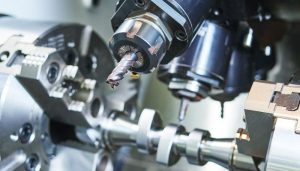
The CNC machining of sliding sleeves involves a series of precise, interconnected processes, with process customization based on the component’s application scenario, structural complexity and precision requirements. For basic structural sliding sleeves such as gear coupling sleeves, the machining process focuses on dimensional accuracy and shape precision, including four key steps: CNC turning precisely controls lathe parameters to machine outer circles, inner holes and end faces, ensuring the basic dimensional accuracy of the sleeve blank; gear hobbing adopts the generating method principle, using a strict transmission ratio between the hob and blank to form high-precision involute tooth profiles for power transmission parts; milling shapes the specific planes of the sleeve to meet assembly and positioning needs; drilling creates precise holes at designated positions to facilitate subsequent connection and fixation. Each process is strictly quality-controlled by professional technicians to ensure seamless connection and compliance with high manufacturing standards.
For high-complexity sliding sleeves such as automotive gearbox shift sleeves—core components responsible for gear switching and power transmission—HLW adopts an optimized integrated machining process to solve the pain points of traditional multi-process machining: blank preparation (forging + annealing) for initial shaping and internal stress elimination; CNC lathe preprocessing to machine inner/outer circles, end faces and reference holes, ensuring perpendicularity ≤0.005mm with a spindle speed of 1200-1500rpm and feed rate of 0.05-0.08mm/r; precision broaching as the core process, using a dedicated broaching machine to realize one-time forming of internal splines, shift guide grooves and positioning keys with a pulling force of 50KN and cutting speed of 4-8m/min, eliminating datum deviation caused by multiple processes; post-processing (deburring + cleaning) to remove surface defects; precision testing with CMM and spline gauges for full dimension and geometric tolerance detection; and final carburizing and quenching heat treatment to enhance wear resistance and structural strength. This integrated process significantly improves machining efficiency and batch consistency compared to traditional methods.
Premium Material Selection for Sliding Sleeves
The selection of sliding sleeve materials is determined by the application’s load, speed, working temperature and environmental conditions, with HLW offering a full range of high-performance materials and customized copper alloys to match different usage requirements, each with unique machining and performance characteristics:
- Copper & Bronze Alloys (the most commonly used for sliding sleeves): Including C95400 aluminum bronze, C93200 leaded tin bronze, C17200 beryllium copper and oil-impregnated porous bronze, as well as cast alloys such as ZCuSn5Zn5Pb5, C86300 and ZCuPb10Sn10. These alloys combine excellent wear resistance, natural lubricity, high thermal conductivity and corrosion resistance, with load capacity up to 7000 psi and continuous operation temperature up to 250°C. They are ideal for heavy-load, high-friction applications in mining, steel, marine and hydraulic equipment, and can be processed by casting (centrifugal, sand, metal mold), turning, milling and grinding, with heat treatment (annealing, solution treatment) to optimize mechanical properties.
- Steel & Alloy Steel: Carbon steel, alloy steel (e.g., 20CrMnTi for automotive gearboxes) and stainless steel are used for high-strength, high-load or corrosive environments. Alloy steel can be heat-treated (quenching, tempering, case hardening) to improve hardness and wear resistance, while stainless steel is the top choice for food processing and marine applications due to its excellent rust prevention.
- Engineering Plastics: Nylon, PEEK and other plastics are suitable for low-load, lightweight applications requiring chemical or electrical resistance, offering a cost-effective alternative for non-heavy-duty scenarios.
HLW also provides customized material formulation services, and can recommend the most wear-resistant alloy grades according to the customer’s operating frequency, performance requirements and working environment to ensure optimal component service life.
Strict Quality Specifications and Quality Control for Sliding Sleeves
Precision and surface quality are the core of sliding sleeve machining, and HLW adheres to international standards and customized tolerance requirements to implement strict quality control throughout the production process, with key quality specifications including:
- Dimensional Tolerances: Strict control of inner/outer diameter (ID/OD), concentricity and roundness, complying with ISO 286 fit standards (common H7/h6 clearance fit for precision shafts). For high-precision automotive sliding sleeves, tolerance requirements reach IT7 level, with dimensional fluctuation controlled within ≤±0.003mm to ensure batch consistency. Tighter tolerances are available for special requirements, with professional engineering optimization to avoid over-engineering and unnecessary costs.
- Surface Finish: The inner diameter of sliding sleeves is precision-honed to a surface roughness of Ra 0.4–1.6 µm (or 16-32 µin Ra for copper alloys), with optimized surface texture to retain a stable lubricant film, reduce friction and wear between mating shafts, and ensure quiet operation of precision machinery. HLW uses professional profilometers to verify surface finish and custom-machines helical or crosshatch oil grooves at 30-45° angles to improve lubrication performance.
- Quality Documentation & Testing: To ensure traceability and compliance, HLW provides a complete set of quality documents for all sliding sleeve products, including Material Test Certificate (MTC) for chemical composition verification, CMM Inspection Report for high-accuracy dimensional measurement, Hardness Test Report for heat-treated parts, and RoHS/REACH compliance certificates for international market requirements. In addition, 100-piece sampling inspection is implemented during production, with all test data retained for traceability.
HLW also enhances the durability of sliding sleeves through post-processing technologies: surface treatments such as zinc plating (corrosion resistance), hard chrome plating (extreme wear resistance) and black oxide (mild finish); and self-lubricating design features such as oil-impregnated porous structures and embedded graphite plugs, eliminating the need for regular lubrication and reducing maintenance costs.
Optimized Machining Solutions and Efficient Production Services
Aiming at the pain points of traditional sliding sleeve machining—such as low precision, poor batch consistency, high scrap rate and low efficiency—HLW has developed a dedicated high-precision broaching machine for medium and small sliding sleeves (outer diameter ≤120mm), realizing integrated one-time forming of complex structures such as internal splines and shift grooves. This optimized solution achieves significant improvements compared to traditional processes: single part processing time is reduced from 8-12 minutes to 3-5 minutes (60% efficiency increase), dimensional fluctuation is reduced by 70%, scrap rate is lowered from ≥15% to ≤0.3% (98% reduction), and overall processing costs are cut by 40%. It effectively solves the problems of datum deviation, surface burrs and assembly stuttering in traditional machining, and is suitable for mass production of automotive gearbox sliding sleeves with an annual output of 100,000 pieces.
HLW offers flexible and efficient production and after-sales services for sliding sleeve machining: supporting small-batch customization and large-volume mass production, with no minimum order quantity; providing fast delivery options including 3-day expedited shipping for urgent orders, 20-day standard delivery and 20-30 day bulk delivery, with on-time shipment for in-stock products; customizing packaging solutions (15mm thickened non-fumigation boards for export, 10mm standard non-fumigation boards or cartons for domestic sales) to ensure safe transportation. We promise strict compliance with material and dimensional requirements, with free replacement or unconditional refund for any non-conforming products.
Contact HLW for Your Custom Sliding Sleeve CNC Machining Needs
HLW is a trusted partner for high-precision CNC machining of sliding sleeves, with rich experience in processing various types of sliding sleeves for heavy industry, automotive, hydraulic, marine and mining equipment. We integrate advanced processing technologies, premium material selection, strict quality control and optimized production solutions to deliver high-performance, durable sliding sleeve components that meet your specific application requirements. Whether you need standard sliding sleeves, custom complex structural sleeves or mass production of automotive gearbox sleeves, our professional team can provide one-stop machining solutions from design optimization to finished product delivery.
For more information about our sliding sleeve CNC machining services, to request a custom quote or to consult about material and process selection, please contact us at 18664342076 or email your inquiries and engineering drawings to info@helanwangsf.com.