How to Quote for CNC Machining: A Comprehensive Guide to Accurate Pricing
Introduction
In the global manufacturing landscape, securing accurate and competitive quotes for CNC (Computer Numerical Control) machining parts is pivotal for both suppliers and overseas buyers. A precise quote not only reflects the technical capabilities of a machining service but also builds trust, facilitates transparent communication, and drives long-term business partnerships. For overseas purchasers, understanding the key factors influencing CNC machining quotes, standard quotation procedures, and how to effectively communicate requirements ensures they receive cost-effective, high-quality solutions that align with their project goals.
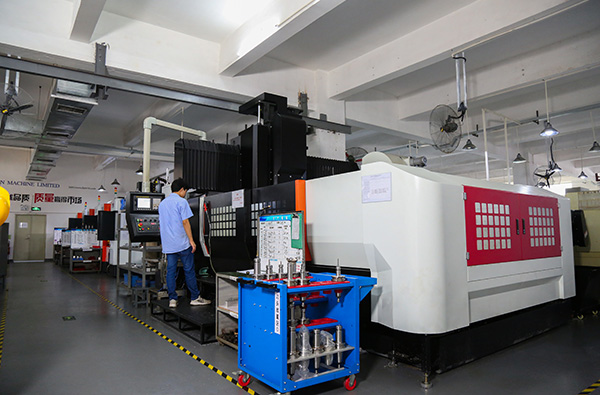
At HLW, a trusted provider of professional CNC machining services with years of experience in serving international clients, we specialize in manufacturing precision parts for diverse industries—including automotive, aerospace, electronics, and medical equipment. Our expertise covers a wide range of materials, from stainless steel (303, 304, 316 series) and aluminum alloys to copper, titanium, and engineering plastics. We are committed to delivering tailored CNC machining solutions that meet global quality standards, and we are dedicated to guiding overseas buyers through every step of the quotation process.
This guide will break down the core elements of a CNC machining quote, outline the step-by-step quotation workflow, and provide actionable insights to help you optimize communication and obtain accurate pricing for your CNC machining projects.
1. Core Factors That Influence CNC Machining Quotation Costs
Before diving into the quotation process, it is essential to understand the key factors that shape the final price of CNC machining services. These elements directly impact production time, material usage, tooling costs, and labor input, and are the foundation of any accurate quote.
1.1 Material Selection and Properties
The type of raw material is one of the most significant cost determinants. Different materials vary widely in price, machinability, and processing difficulty:
- Common Materials: Stainless steel (303, 304, 316) is widely used for its corrosion resistance and durability; aluminum alloys (6061, 7075) are lightweight and easy to process, making them ideal for structural parts; copper and copper alloys offer excellent electrical conductivity; titanium is high-strength but challenging to machine, leading to higher processing costs.
- Material Characteristics: Hardness, density, and thermal conductivity affect tool wear and processing efficiency. For example, materials with high hardness (such as titanium) require specialized cutting tools and longer processing times, which increase costs. At HLW, we provide detailed material recommendations based on your project requirements, balancing performance, cost, and machinability.
1.2 Part Complexity and Precision Requirements
The complexity of the part and the required precision level directly influence processing difficulty and production time:
- Geometric Complexity: Parts with intricate structures, such as curved surfaces, deep holes, small threads, or multi-angle features, require more complex programming and longer machining times. 3D complex parts may demand 5-axis CNC machining, which involves higher technical thresholds and equipment costs.
- Tolerance and Surface Finish: Tight tolerances (e.g., ±0.005mm) and high-surface-quality requirements (such as mirror finishing) require precise machining parameters and additional testing and finishing processes. Higher precision standards typically result in increased processing costs and longer lead times.
1.3 Processing Technology and Equipment Type
The choice of CNC processing technology and equipment directly affects production efficiency and cost:
- Equipment Categories: 3-axis CNC machining centers are suitable for simple flat and hole-processing parts; 4-axis/5-axis equipment is required for complex spatial structure parts; CNC lathes are ideal for shaft-type, disc-type, and other rotary parts.
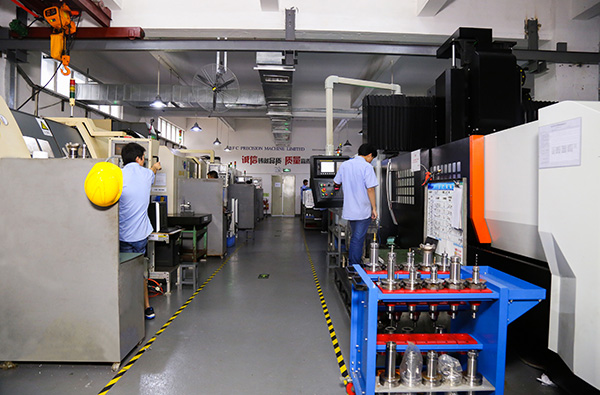
- Processing Technology: Different processes (such as turning, milling, drilling, tapping, grinding, and EDM) are selected based on part features. Complex parts may require a combination of multiple processes, increasing processing steps and costs. HLW is equipped with a full range of CNC equipment, from 3-axis to 5-axis machining centers, ensuring we can adapt to various part processing needs.
1.4 Batch Size and Production Lead Time
- Batch Quantity: Small-batch or prototype processing often involves higher unit costs due to fixed tooling and programming expenses. Mass production can reduce unit costs through batch processing and optimized efficiency.
- Lead Time Urgency: Expedited processing (e.g., 24-hour fast delivery) requires additional labor and equipment scheduling, which will increase the quotation price. Standard lead times are more cost-effective for non-urgent projects.
1.5 Additional Processing and Auxiliary Costs
- Tooling and Fixture Costs: Custom jigs and fixtures are required for specific parts, and their design and manufacturing costs are included in the quote. For mass production, tooling costs can be amortized across batches.
- Surface Treatment: Processes such as anodizing, electroplating, powder coating, sandblasting, and polishing add supplementary costs. The type of surface treatment is determined by the part’s functional and aesthetic requirements.
- Quality Testing: Costs include coordinate measuring machine (CMM) testing, hardness testing, and dimensional inspection reports, which are essential for ensuring product quality, especially for precision parts.
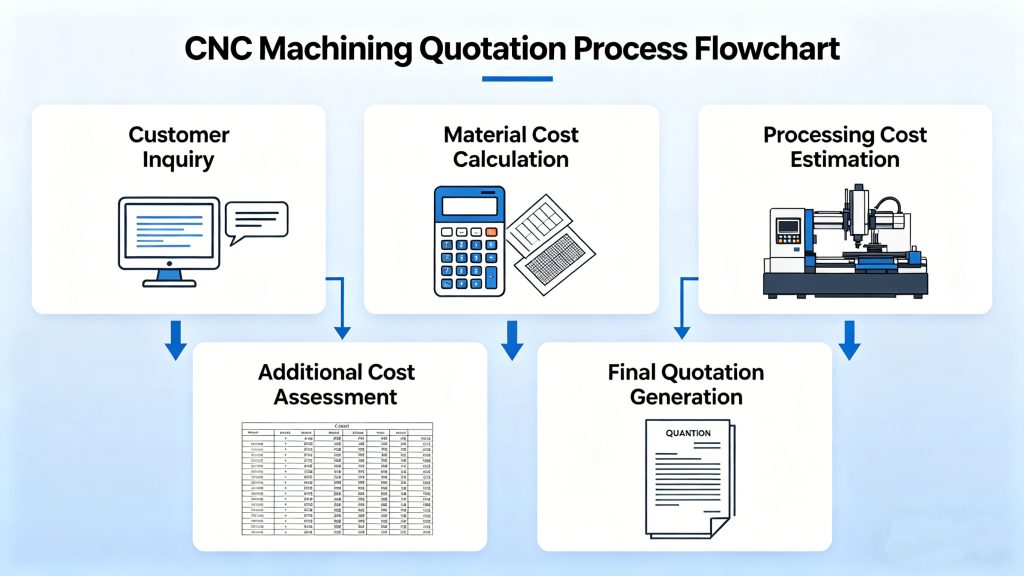
2. Step-by-Step Workflow for Obtaining an Accurate CNC Machining Quote
To ensure a smooth and efficient quotation process, both buyers and suppliers should follow a standardized workflow. At HLW, we have optimized our quotation process to meet the needs of overseas clients, ensuring clarity, transparency, and accuracy at every stage.
2.1 Prepare Complete and Detailed Project Documentation
The foundation of an accurate quote is comprehensive project information. Buyers should provide the following materials to avoid ambiguity and repeated revisions:
- 3D Model Files: Provide standard format files such as STEP, IGES, STP, or STL. These files allow our technical team to conduct precise part analysis and programming.
- 2D Drawings: If available, include 2D engineering drawings with clear dimension tolerances, surface finish requirements, material specifications, and surface treatment notes.
- Batch and Lead Time Requirements: Clearly state the required production quantity, delivery date, and any urgent processing needs.
- Special Requirements: Note any industry-specific standards (e.g., ISO, ASTM) or quality control expectations.
2.2 Submit Quotation Inquiries and Confirm Basic Information
Buyers can submit inquiries through official channels, including email (info@helanwangsf.com) or phone (+86 18664342076). When submitting, ensure the following key information is included:
- Basic contact details (name, company, country, email, phone).
- Core part information: material type, part quantity, tolerance requirements, surface finish, and key structural features.
- Expected delivery time and budget range (if available).
Our technical team will review the inquiry within 24 hours and contact you to confirm any unclear details, such as material alternatives or processing feasibility.
2.3 Technical Evaluation and Quotation Preparation
Our professional engineering team will conduct a detailed technical evaluation based on the provided documentation:
- Feasibility Analysis: Assess whether the part can be processed with existing equipment, identify potential processing difficulties, and propose optimized solutions to reduce costs.
- Process Planning: Determine the appropriate processing technology (turning, milling, 5-axis machining, etc.), select matching equipment, and estimate processing time.
- Cost Calculation: Calculate material costs, processing costs, tooling costs, surface treatment costs, and testing costs based on the part’s features and batch requirements.
- Quotation Generation: Compile a detailed quote including total price, unit price, cost breakdown, delivery time, and service terms.
2.4 Quotation Review and Confirmation
The quote will be sent to the buyer for review. Our team is available to explain any cost components, answer technical questions, and provide optimization suggestions—such as material substitution or process adjustment—to help buyers achieve cost savings without compromising quality. Once the buyer confirms the quote, we will sign a formal processing agreement to formalize the partnership.
2.5 Post-Confirmation Preparation and Production
After order confirmation, our production team will:
- Arrange tooling and fixture design/manufacture based on the part’s features.
- Conduct final programming verification and simulate processing to avoid errors.
- Confirm raw material inventory and arrange procurement to ensure on-time production.
3. Key Tips for Overseas Buyers to Optimize CNC Machining Quotations
For overseas purchasers, effective communication and reasonable demand setting are key to obtaining accurate and cost-effective quotes. Here are some practical tips:
3.1 Clarify Requirements in Advance
Avoid vague descriptions such as “common precision” or “general materials.” Clearly define tolerances, surface finish, material grades, and batch sizes. Providing high-quality 3D models and drawings reduces communication barriers and minimizes quote revisions.
3.2 Balance Cost and Quality
While pursuing lower prices is understandable, excessively low quotes may indicate compromised quality or hidden costs. Prioritize suppliers with proven technical capabilities, quality certification, and transparent cost structures. HLW adheres to strict quality control standards, and our quotes reflect fair pricing for high-quality craftsmanship and reliable service.
3.3 Leverage Professional Technical Advice
If you are unsure about material selection, processing technology, or tolerance settings, consult the supplier’s technical team. Experienced suppliers can offer tailored recommendations based on project requirements, helping you optimize design for manufacturability (DFM) and reduce unnecessary costs.
3.4 Establish Long-Term Partnerships
For repeated orders, building long-term partnerships with reliable suppliers like HLW can lead to preferential pricing, priority service, and improved communication efficiency. We value long-term cooperation and are committed to growing with our overseas clients.
4. Why Choose HLW for Your CNC Machining Quotation Needs
As a professional CNC machining service provider with extensive experience in international trade, HLW offers unique advantages to overseas buyers:
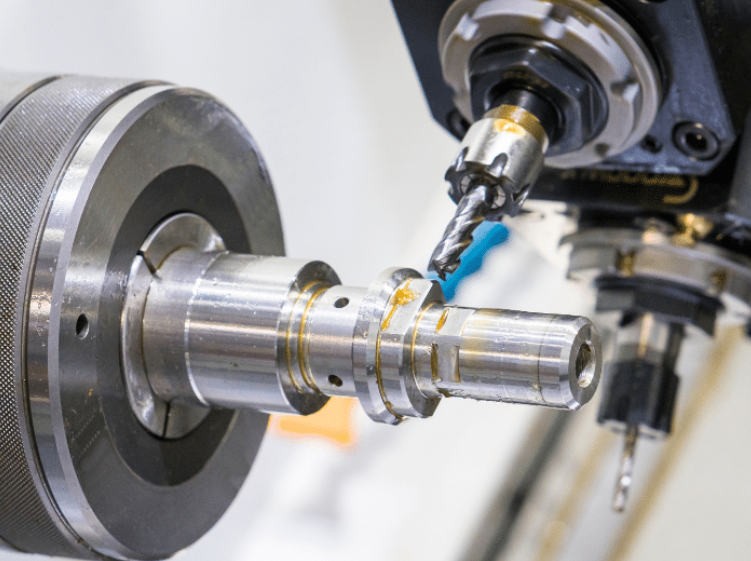
- Comprehensive Processing Capabilities: Equipped with advanced 3-axis, 4-axis, and 5-axis CNC equipment, we support processing of simple to complex parts, covering a wide range of materials including stainless steel, aluminum, copper, and more.
- One-Stop Service Solutions: From technical consultation, 3D model analysis, and process planning to mass production, surface treatment, and quality testing, we provide end-to-end services, simplifying your procurement process.
- Transparent Quotation System: Our quotes include detailed cost breakdowns, with no hidden charges. We communicate openly about processing costs, material prices, and lead times, ensuring full transparency.
- Professional Technical Team: Our engineers have extensive experience in CNC machining for global markets, proficient in overseas project requirements and quality standards. We provide timely technical support and optimization suggestions throughout the process.
- Reliable Quality and On-Time Delivery: We implement strict quality control procedures, including in-process inspection and final CMM testing, to ensure product compliance with international standards. Our efficient production management guarantees on-time delivery for projects of all sizes.
Conclusion
Obtaining an accurate CNC machining quote requires a clear understanding of key cost factors, a standardized workflow, and effective communication between buyers and suppliers. At HLW, we are dedicated to simplifying the quotation process for overseas clients, providing transparent, precise, and cost-effective quotes that meet your project needs.
Whether you require prototype processing, small-batch customization, or mass production of complex parts, our professional team is ready to assist you. Contact us today at +86 18664342076 or email info@helanwangsf.com to share your project requirements, and our experts will provide a detailed, customized quote to help your project succeed.